7 Ways to Reduce Dust and Allergens at Home
Table of Contents
- Why Dust and Allergens Matter for Your Home
- Wash Bedding in Hot Water Weekly
- Use Dust-Mite-Proof Mattress and Pillow Covers
- Control Indoor Humidity to Prevent Allergen Growth
- How to Improve Indoor Air Quality with HEPA Filtration
- Best Air Purifier for Pet Odors and Dander Control
- Declutter and Reduce Dust Collectors Throughout Your Home
- Establish a Regular Vacuuming and Cleaning Routine
- Frequently Asked Questions
Last Updated: September 21, 2026
Why Dust and Allergens Matter for Your Home
Dust and allergens are more than just a cleaning nuisance. They circulate through your home every day, settling on surfaces, bedding, and furniture where you spend the most time. For families with young children, older adults, or anyone with allergies, this becomes a serious health concern.
Indoor air quality directly affects respiratory health. Airborne irritants like dust mites, pet dander, and mold spores trigger sneezing, congestion, and worse. Even if you don't have diagnosed allergies, these particles accumulate in your lungs over time.
The good news: you can take concrete steps to reduce dust allergens at home. This guide covers seven practical strategies that work together to improve your indoor environment. Combining these approaches creates a cleaner, healthier home for families dealing with allergies and respiratory sensitivity.
Wash Bedding in Hot Water Weekly
Your bed is ground zero for allergen accumulation. Dust mites thrive in warm, humid bedding and feed on dead skin cells. A single mattress can harbor thousands of these microscopic pests.
Hot water kills dust mites and removes allergens more effectively than cold or warm cycles. Wash sheets, pillowcases, and blankets in water heated to at least 130°F once a week. This simple habit makes a measurable difference.
What to wash:
- All bedding (sheets, pillowcases, duvet covers)
- Mattress pads and toppers
- Blankets and comforters
- Pillows (if machine-washable)
Dry items on high heat when possible. The combination of hot water and heat removes moisture that dust mites need to survive. If someone in your home has severe allergies, consider washing bedding twice weekly instead.
Use Dust-Mite-Proof Mattress and Pillow Covers
Even with weekly washing, dust mites live deep inside your mattress where water can't reach. Dust-mite-proof encasements create a physical barrier that prevents mites from entering or escaping.
These covers are specially woven with fibers tight enough to block microscopic dust mites but loose enough to breathe normally. They protect your mattress and pillows from becoming allergen reservoirs over time.
How to choose the right covers:
- Look for "dust-mite-proof" or "allergen-blocking" labeling
- Ensure full encasement (top, sides, and bottom)
- Check that zippers are sealed to prevent mite entry
- Choose breathable materials to avoid heat buildup
Leave covers on year-round. They're most effective when used continuously, not seasonally. Wash the covers themselves every few months in hot water to remove any surface allergens.
Control Indoor Humidity to Prevent Allergen Growth
Dust mites and mold thrive in humid environments. Keeping relative humidity between 30% and 50% slows their reproduction dramatically.
High humidity also promotes mold spore growth on walls, in closets, and around windows. These airborne irritants trigger respiratory symptoms and worsen allergy severity. Lower humidity means fewer allergens circulating through your home.
How to reduce humidity:
- Use a dehumidifier in damp rooms (basements, bathrooms, bedrooms)
- Run bathroom exhaust fans during and 20 minutes after showers
- Ensure proper ventilation in kitchens while cooking
- Fix leaky pipes and water damage promptly
- Open windows on dry days to exchange humid indoor air
Check humidity levels with a simple meter (available at hardware stores). Most homes in desert climates naturally maintain lower humidity, but bathrooms and basements can still become problematic zones. A portable dehumidifier in these areas helps maintain healthy levels throughout the house.
How to Improve Indoor Air Quality with HEPA Filtration
HEPA filters capture 99.97% of particles 0.3 microns or larger, the threshold where most allergens become invisible to the naked eye but remain potent respiratory irritants. This includes dust, pollen, pet dander, mold spores, and even some airborne bacteria. The mechanism is simple: air passes through a dense mat of fiberglass fibers arranged in a random pattern, and particles either collide with fibers, get trapped by electrostatic charge, or are intercepted as air flows around them.
For allergy-sensitive households, HEPA-grade filtration is the clinical gold standard. Studies show that homes using HEPA filtration report measurably lower dust mite allergen levels (Der p 1) and reduced respiratory symptoms compared to homes relying on standard filtration alone.
What HEPA filters remove:
- Dust and dust mite debris (allergen particles 1-10 microns)
- Pet dander and hair fragments
- Pollen and mold spores
- Airborne bacteria and viruses
- Chemical irritants and volatile organic compounds (VOCs)
Why whole-home coverage matters more than room-by-room solutions:
A single room purifier addresses air quality in one space, typically a bedroom or living room, but allergens circulate throughout your home via air movement, foot traffic, and normal ventilation. Dust settles on surfaces in hallways, kitchens, and other rooms where you spend time. A whole-home air purification system installed in your attic operates continuously, filtering air from every room simultaneously without requiring you to move units between spaces or manage multiple devices.
Whole-home systems also maintain consistent air changes per hour (ACH) across your entire home. Most allergy experts recommend 4-6 air changes per hour for meaningful allergen reduction. A single room purifier might achieve this in one bedroom but leaves the rest of your home unfiltered. A professionally installed whole-home system delivers hospital-grade HEPA filtration to your entire living space, running 24/7 in the attic, completely out of sight.
Best Air Purifier for Pet Odors and Dander Control
Pet owners face a unique allergen challenge. Dogs and cats shed dander, microscopic flakes of skin, continuously throughout the year, with seasonal peaks during spring and fall. A single cat can generate enough dander to trigger allergic reactions in sensitive individuals within hours. Unlike dust mites, which concentrate in bedding, pet dander disperses throughout your entire home, settling on furniture, carpets, air vents, and clothing.
Pet allergens are also sticky. The primary cat allergen (Fel d 1) and dog allergen (Can f 1) bind to dust particles and pet hair, making them harder to remove with standard vacuuming. These proteins also accumulate in soft furnishings and become airborne when pets move, jump, or shake.
Why pet odors and dander require dual-action filtration:
Odors come from volatile organic compounds (VOCs) released by pet urine, saliva, and skin oils.
Managing pet-related air quality:
- Brush pets 3-4 times weekly to remove loose fur and dander before it becomes airborne (this is especially important during shedding seasons)
- Wash pet bedding weekly in hot water (at least 130°F) to kill dust mites that colonize pet hair
- Vacuum carpets and furniture 2-3 times weekly with a HEPA-filter vacuum to capture dander before it settles permanently
- Wash hands after petting to avoid transferring dander to your face and eyes
- Keep pets out of bedrooms where you spend 8+ hours daily, allowing that space to remain a low-allergen zone
- Use washable furniture covers on sofas and chairs where pets rest
Why whole-home filtration outperforms room purifiers for pet allergens:
Declutter and Reduce Dust Collectors Throughout Your Home
Clutter traps dust. Every decorative item, stack of papers, and unused object becomes a dust-collection surface. Minimizing these items directly reduces allergen accumulation and makes cleaning faster.
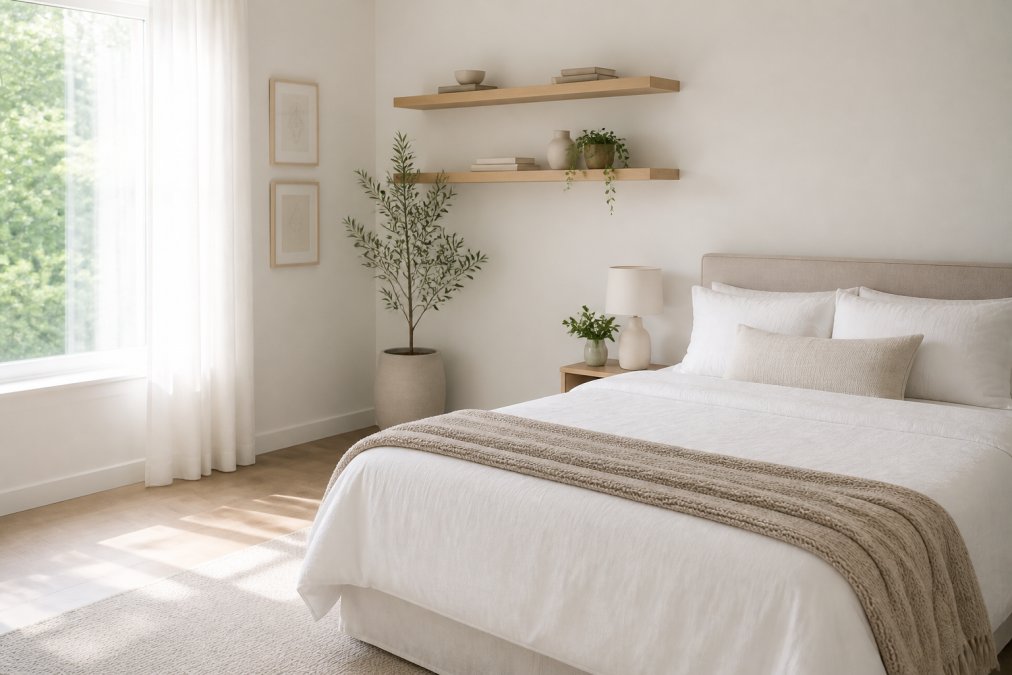
High-dust-collection areas to declutter:
- Bedroom nightstands and dressers
- Living room shelves and side tables
- Closet floors and shelves
- Under beds and furniture
- Window sills and baseboards
Establish a Regular Vacuuming and Cleaning Routine
Vacuuming removes dust before it becomes airborne. Regular cleaning prevents allergen buildup on surfaces. Together, these habits form the foundation of dust and allergen control.
Weekly cleaning routine:
- Vacuum carpets and rugs with a HEPA-filter vacuum
- Dust hard surfaces with a damp cloth (dry dusting releases particles)
- Wipe down light switches, door handles, and remotes
- Wash bathroom and kitchen surfaces to prevent mold growth
- Sweep hard floors to catch dust before it settles
Monthly tasks:
- Wash curtains and window treatments
- Clean air vents and return air grilles
- Wipe down ceiling fans and light fixtures
- Vacuum under furniture and beds
- Clean refrigerator coils and other dust-prone appliances
Frequently Asked Questions
How often should I wash bedding to reduce dust mites and allergens?
Wash bedding in hot water (at least 130°F) once weekly to kill dust mites and remove allergen accumulation. Hot water cycles are most effective because dust mites and their droppings cannot survive high temperatures. If someone in your household has severe allergies, washing twice weekly provides additional protection. Include pillows and mattress pads in your routine.
Do whole-home air purification systems help with dust mites and pet odors?
Yes. A standalone whole-home air purification system removes microscopic particles, dust mite debris, and pet dander from the air throughout your entire home 24/7. Unlike portable room units, a whole-home system delivers consistent air purification to every room without requiring manual repositioning or multiple units, making it ideal for allergy-sensitive households and homes with pets.
What humidity level should I maintain to prevent dust mites and mold spores?
Keep relative humidity between 30% and 50% to prevent dust mite proliferation and mold growth. Dust mites thrive in humidity above 50%, while levels below 30% can cause respiratory irritation. Use a dehumidifier in damp areas like basements and bathrooms, and ensure proper ventilation throughout your home. A hygrometer helps you monitor humidity levels accurately.
Can non-toxic cleaning methods effectively reduce dust and allergens?
Yes. Vacuuming with HEPA filters, damp microfiber cloths, and vinegar-water solutions remove dust and allergens without chemical irritants. HEPA vacuums trap 99.97% of particles 0.3 microns or larger. Damp cleaning prevents dust from becoming airborne, and natural cleaners avoid adding chemical particulate matter to your indoor air. Combine these methods with regular decluttering for maximum effectiveness.