8 Signs Your Home Air Quality Is Poor

Table of Contents
- 1. Persistent Respiratory Symptoms and Allergy Flare-ups
- 2. Unpleasant Odors That Won't Go Away
- 3. Visible Mold, Mildew, or Musty Smells
- 4. High Humidity Levels and Condensation
- 5. Excessive Dust Accumulation Throughout Your Home
- Health Effects of Poor Indoor Air Quality
- How to Improve Indoor Air Quality
- Conclusion
- Frequently Asked Questions
Last Updated: September 4, 2026
You walk into your living room and feel fine, but your sinuses have been congested for three weeks straight. The kids are coughing more than usual, and that musty smell near the hallway won't fade no matter how much you clean. These are some of the 8 signs your home air quality is poor, and recognizing them early is the difference between treating symptoms and fixing the actual problem. At Qairbox, we've spent years helping homeowners in tightly sealed, dusty climates understand what their air is doing to their families.
Poor indoor air quality is a condition where airborne pollutants, allergens, and irritants accumulate to levels that can affect your health and comfort. The challenge is that most of these contaminants are invisible. By the time you notice the signs, your family has likely been breathing them for weeks.
Below, we'll walk through the eight most reliable warning signals and what each one means for your home. We'll also cover the health effects of poor indoor air quality and how to improve indoor air quality so you can take action with confidence.
1. Persistent Respiratory Symptoms and Allergy Flare-ups
The most common sign of poor air quality is a household that's constantly fighting respiratory issues. If you notice that allergy symptoms, sinus congestion, or asthma symptoms improve when you leave the house for a few days, your indoor environment is the likely culprit.
This happens because homes trap airborne irritants like dander, dust mites, and particulate matter. When windows stay closed for weeks, especially in hot desert climates where homes run sealed for cooling efficiency, those contaminant levels climb steadily.
Pay attention to whether multiple family members experience similar symptoms. One person sneezing might be individual sensitivity. Three people with sinus congestion and itchy eyes points to the environment itself.
2. Unpleasant Odors That Won't Go Away
Odors are your nose telling you something is off. Cooking smells that linger for days, pet odors that resist cleaning, or a general staleness that returns shortly after airing out the house all point to poor ventilation and air circulation.
Stagnant air holds onto odor molecules. Without adequate air exchange rate, those molecules recirculate and settle into fabrics, carpets, and upholstery. The result is a home that never quite smells fresh, no matter how diligent your cleaning routine.
A common mistake is masking these odors with candles or sprays. That only adds volatile organic compounds to the mix. The real fix is removing the contaminated air and replacing it with cleaner air, which is where whole-home air purification becomes relevant.
3. Visible Mold, Mildew, or Musty Smells
Mold growth is one of the clearest indicators of an air quality problem. Visible patches on walls, ceilings, or around windows mean mold spores are actively releasing into your breathing air.
Musty odors are often the first clue that mold exists behind walls or under flooring where you can't see it. Mold spores spread easily through the air, and once they settle into your HVAC system or ductwork, they continue circulating throughout the house.
The presence of mold also signals a moisture problem. Mold needs humidity to thrive, so visible growth means your indoor moisture levels are too high for too long. Addressing the mold without addressing the underlying air circulation issue means it will return.
4. High Humidity Levels and Condensation
Condensation on windows in the morning or a sticky feeling in the air are signs that your relative humidity is running too high. Indoor humidity above 60 percent creates conditions where mold, dust mites, and airborne pathogens flourish.
Watch for condensation on interior walls, fogged windows, or a damp feeling in bathrooms and kitchens that lingers after cooking or showering. These patterns indicate the air isn't moving enough to dry out surfaces.
5. Excessive Dust Accumulation Throughout Your Home
If you're dusting every few days and still seeing a fine layer of particles on shelves, electronics, and window sills, your air is carrying more particulate matter than it should. Excessive dust is one of the easiest signs to spot and one of the most frequently ignored.
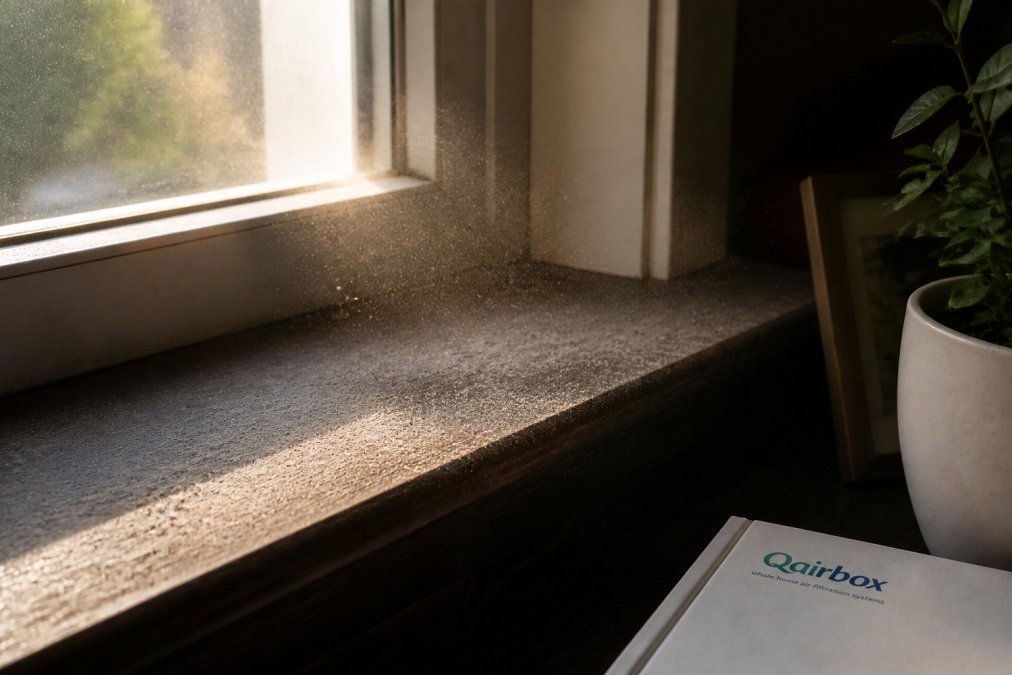
Dust isn't just dirt. It contains dead skin cells, dander, dust mite waste, and fabric fibers. When dust accumulates quickly, it means those particles are staying suspended in the air and settling throughout your living spaces.
A common mistake is assuming more cleaning will solve it. The dust will keep returning because the air keeps delivering it. Reducing the airborne particle load is the only lasting solution.
Health Effects of Poor Indoor Air Quality
The health effects of poor indoor air quality extend far beyond sneezing and congestion. Chronic exposure to indoor pollutants has been linked to headaches, dizziness, fatigue, and difficulty concentrating. Many homeowners don't connect these symptoms to their air because they develop gradually and feel like general tiredness rather than an environmental problem.
According to EPA guidance on indoor air quality, indoor pollutant levels can be several times higher than outdoor levels, which matters because most people spend the majority of their time indoors. The EPA identifies poor indoor air quality as a significant contributor to respiratory issues and other health concerns.
The Sleep and Cognitive Connection
One of the most overlooked effects of poor air quality is its impact on sleep and mental function. When you're breathing air laden with particulates, VOCs, and allergens, your body works harder to filter and process those contaminants, even while you sleep. This constant low-level stress on your respiratory system prevents deep, restorative sleep.
Research from studies on indoor environmental quality and cognitive function suggests that poor air quality correlates with reduced cognitive performance, slower reaction times, and difficulty with complex decision-making. The mechanism is straightforward: your brain needs oxygen to function optimally. When air quality is poor, oxygen delivery is compromised, and mental clarity suffers.
Common signs that poor air quality is affecting your sleep and cognition include:
- Waking up feeling unrested despite 7-8 hours in bed
- Brain fog or difficulty focusing during the day
- Slower reaction times or feeling "mentally sluggish"
- Mood changes, irritability, or difficulty managing stress
- Difficulty remembering details or completing complex tasks
- Feeling more alert and focused when you're away from home for several hours
If multiple family members experience these symptoms simultaneously, and they improve when you spend time outdoors or away from home, poor indoor air quality is likely the culprit.
Vulnerable Populations
Children, older adults, and those with existing respiratory conditions are most vulnerable to poor air quality. Their bodies are either still developing, less efficient at filtering airborne irritants, or already compromised by age or illness. For these groups, consistent air quality isn't a comfort issue, it's a health necessity.
Young children spend significant time indoors (school, home, childcare), making their cumulative exposure to indoor pollutants higher than adults who move between environments. Older adults often have reduced lung capacity and immune function, making them more susceptible to infections and inflammation triggered by poor air. Both groups benefit significantly from whole-home air purification that runs continuously, not just when symptoms flare up.
How to Improve Indoor Air Quality
Improving your home's air starts with identifying the specific pollutants affecting you. A common approach is to increase ventilation by opening windows, but that's not practical in hot desert climates where outdoor air is dusty and homes are sealed for energy efficiency.
Air purification is the most effective strategy for tightly sealed homes. The key is choosing a solution that matches the scale of the problem. Room units only clean the air in one space, leaving the rest of your home untreated.
A whole-home air purification system addresses the entire house rather than individual rooms. These systems are professionally installed and operate continuously, which means every room benefits from consistent air cleaning without you managing multiple devices.
| Solution Approach | Coverage | Maintenance | Best For |
|---|---|---|---|
| Opening windows | Single room at a time | None, but brings in outdoor dust | Mild climates, short periods |
| Room purifiers | One room per unit | Multiple filters to track | Renters, single-room focus |
| Whole-home purification | Entire house | One system, low upkeep | Sealed homes, allergy-sensitive families |
For homeowners in hot, tightly sealed desert climates, the most effective option is a standalone whole-home air purification system installed in the attic. This approach cleans air throughout the entire residence without taking up floor space or requiring you to maintain multiple room units.
Qairbox offers exactly this kind of solution. The QBox system is professionally installed in the attic, out of sight, and runs quietly on its own around the clock. It delivers hospital-grade purification to the whole house, reducing odors, airborne particles, dust, and chemical irritants without connecting to or modifying your existing HVAC system.
Because it operates independently, it doesn't affect your heating and cooling efficiency or your energy bills. And with only one system to maintain, you won't spend weekends swapping filters across multiple room purifiers.
Conclusion
The 8 signs your home air quality is poor are your home's way of asking for help. Respiratory symptoms that improve when you leave, lingering odors, mold, condensation, and rapid dust buildup all point to air that isn't clean enough for your family to breathe comfortably.
Ignoring these signs means accepting chronic congestion, restless sleep, and the quiet toll that poor air takes on everyone in the household. The fix doesn't have to be complicated.
Qairbox makes whole-home purification simple with a standalone system that works 24/7 in the background, requires minimal maintenance, and never interferes with your existing HVAC setup. If you're ready to breathe easier in every room of your house, schedule a consultation with Qairbox and find out how an attic-mounted purification system can transform your indoor environment.
Frequently Asked Questions
How can I tell if my indoor air quality is poor?
Poor home air quality often shows up as persistent symptoms: headaches, respiratory irritation, worsening allergies, and fatigue that improve when you leave home. Look for visible signs too: dust buildup, musty odors, condensation on windows, or visible mold growth. If multiple signs appear together, your indoor air quality likely needs attention.
What are the main health effects of poor indoor air quality?
Poor indoor air quality triggers respiratory issues, sinus congestion, and asthma flare-ups. Over time, exposure to airborne irritants, mold spores, and volatile organic compounds can cause chronic fatigue, headaches, and dizziness. Children and older adults are especially vulnerable. Addressing these issues early prevents long-term health complications.
How do I improve indoor air quality in my home?
Start by reducing sources: seal gaps around windows and doors to prevent outdoor dust, use air filtration to remove particulate matter and allergen triggers, and maintain proper humidity levels (30-50%) to prevent mold growth. For comprehensive improvement, a whole-home air purification system installed in the attic provides hospital-grade filtration 24/7 without taking up living space.
Can poor air quality make you sick?
Yes. Prolonged exposure to indoor pollutants, dust mites, dander, and mold spores irritates airways and triggers inflammation. This causes or worsens asthma, allergies, and respiratory infections. Volatile organic compounds off-gassing from furniture and cleaning products add chemical irritants. The longer you breathe contaminated air, the greater the risk of chronic health problems.