Air Purifier Maintenance Tips for Pet Owners: 2026 Guide
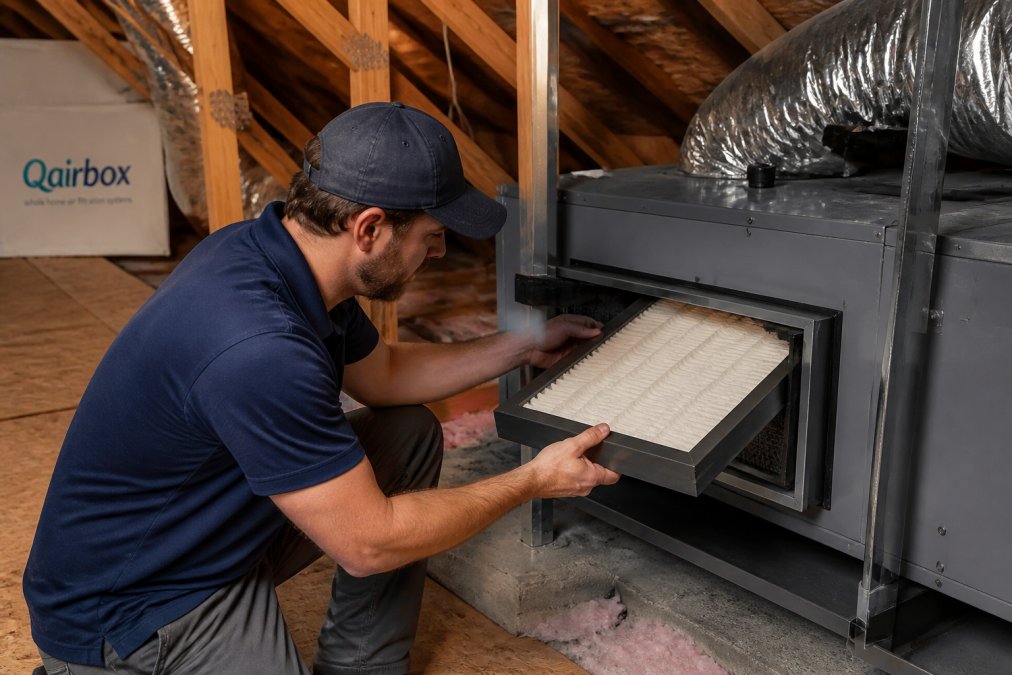
Table of Contents
- Why Pet Owners Need a Different Air Purifier Maintenance Routine
- Managing Pet Dander in Large Homes: The Capacity Question
- The Monthly Air Purifier Maintenance Checklist for Pet Households
- Grooming, Shedding, and the Habits That Cut Filter Load
- Professional Air Quality System Maintenance: When to Call Someone
- Filter Disposal Safety for Allergy Sufferers
- Signs Your System Is Overdue for Attention
- Frequently Asked Questions
Last Updated: September 13, 2026
Why Pet Owners Need a Different Air Purifier Maintenance Routine
Pet owners need a different air purifier maintenance routine because dander, hair, and odor-causing compounds load filters faster than dust alone. This guide covers the schedule, habits, and warning signs that keep a whole-home air purification system working in a pet household.
A common mistake is treating a pet home like any other home and stretching filter changes to the same interval. In practice, shedding season alone can shorten filter lifespan noticeably. The ASPCA pet care guidance on shedding and grooming notes that regular brushing removes loose hair before it circulates, which directly reduces what your system has to catch.
Pet dander, shed skin cells, saliva proteins, and hair fragments, is the primary allergen source in most pet households. Unlike visible hair, dander particles stay airborne for hours and settle into upholstery, bedding, and carpet. That is why air purifier maintenance for pet owners focuses on capturing microscopic particles and controlling the odor compounds that cling to filters.
Managing Pet Dander in Large Homes: The Capacity Question
Managing pet dander in large homes comes down to air exchange rate and how much air the system moves through filtration per hour. A single unit sized for an apartment will not keep up in a sprawling house with multiple animals.
Square footage is only half the equation. Pet count, coat type, and how tightly the home is sealed matter just as much. A double-coated breed in a sealed desert home sheds a heavier load than a short-haired pet in a drafty one.
How Many Pets Before One System Isn't Enough
There is no universal pet limit, but the practical signal is recovery time. If odors return within a day of cleaning and filters clog well before their expected interval, the system is undersized.
For larger homes, a professionally installed whole-home air purification system handles the whole-house volume instead of one room at a time. QBox is a standalone, attic-mounted system that runs quietly 24/7 and does not connect to or modify your existing HVAC or A/C, continuous filtration without tying the job to your cooling system's runtime.
| Household Load | Typical Signal | Practical Move |
|---|---|---|
| 1 pet, short coat, under 1,500 sq ft | Filters last full interval | Standard monthly check |
| 2-3 pets, mixed coats | Odors return in 2-3 days | Shorten filter interval |
| 3+ pets, double coats, large home | Filters clog early, hair everywhere | Whole-home capacity review |
The Monthly Air Purifier Maintenance Checklist for Pet Households
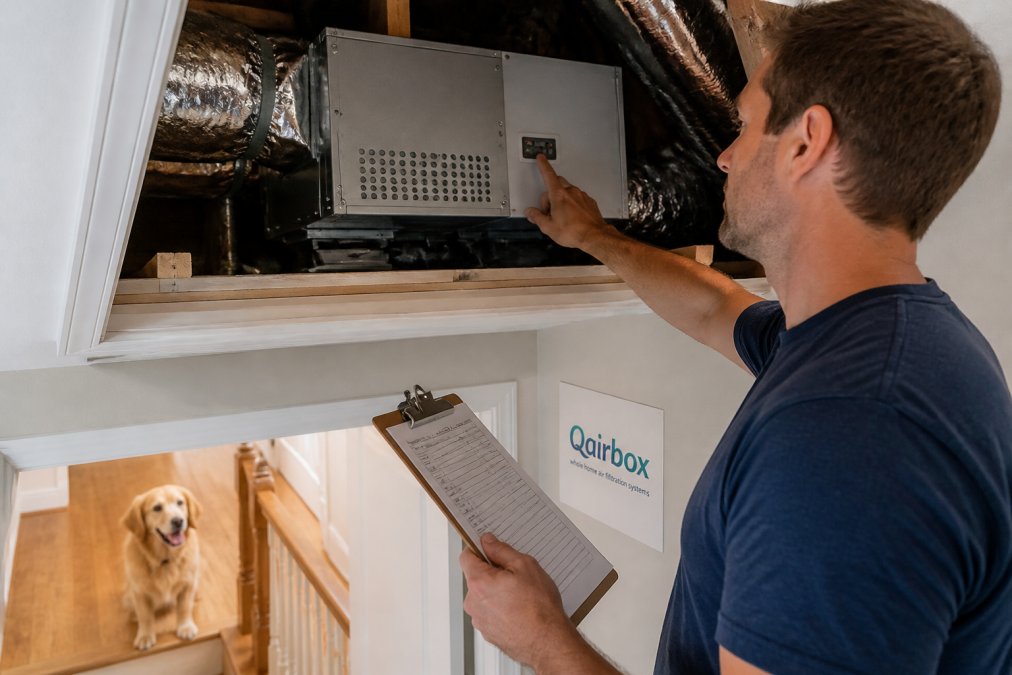
A monthly check catches most problems before they affect air quality. Set a recurring reminder and work through the list in one pass. The goal is not to clean everything, it is to find the component loading fastest and fix it before it drags down the rest of the system.
- Inspect the pre-filter for visible hair and lint; clear it if matted
- Vacuum the pre-filter face with a brush attachment on low suction, do not scrub, which pushes hair deeper into the media
- Check the filter indicator or note any change in airflow
- Vacuum intake and return vents where hair collects
- Wipe down surfaces near pet beds, where dander settles
- Note odors; a returning smell signals a loaded filter
- Log the date so you can spot a shortening lifespan trend
The Pre-Filter Hack That Extends Main Filter Life
The pre-filter is the workhorse in a pet home. Most hair and large debris never reaches the main filter when the pre-filter is maintained, the single biggest factor in filter lifespan. A two-minute vacuum pass every two to three weeks can meaningfully stretch the interval before the main filter needs changing.
A practical routine:
- Vacuum the pre-filter face with a brush attachment on low suction. High suction pulls the media out of shape and creates gaps hair can slip through.
- If the pre-filter is washable, rinse it under lukewarm water, never hot, which can warp the frame, and let it dry completely before reinstalling. A damp pre-filter invites mold growth.
- Keep a spare pre-filter on hand and swap it in while the dirty one dries, so filtration never stops.
- Replace the pre-filter when the media stays matted after cleaning or the frame no longer seats flush, a pre-filter that no longer seals lets hair bypass it entirely.
Reading the Signals Instead of the Calendar
A calendar tells you when to look; the system tells you what it needs. Three signals matter most:
- Airflow drop. If vents feel weaker than last month, the pre-filter or main filter is loading. Check the pre-filter first, it is the cheaper fix.
- Odor return. Pet odors coming back within a day or two of cleaning point to a loaded filter or a dander reservoir in upholstery and bedding, not the system itself.
- Early clogging. If filters reach end-of-life well before their expected interval, the load has outgrown the routine. Shorten the interval or review capacity.
Log each check with the date and what you found. Over two or three months, the log shows whether filter life is stable or shrinking, and shrinking filter life is the earliest sign a pet household has outgrown its setup.
What Belongs on the Quarterly Pass
Some tasks do not need monthly attention but should not be forgotten:
- Inspect the housing and seals for gaps where unfiltered air can bypass the media
- Check that the unit is moving the air volume it was designed for, not just running
- Review the filter log for a downward trend in lifespan
- Reassess capacity if pet count, coat type, or home size has changed
For a professionally installed whole-home system, the quarterly pass is where you decide whether the routine still fits the household, or whether it is time for a technician.
Grooming, Shedding, and the Habits That Cut Filter Load
Grooming is the cheapest form of air purification maintenance because it removes allergens before they go airborne. Every hair you catch with a brush is a hair your filtration system never has to hold, directly extending how long filters last.
Pets shed continuously, but shedding is not steady. It spikes with seasonal coat changes, and in hot, dusty climates the spike can be sharp and long. During those weeks, loose hair and dander entering the air can shorten filter life noticeably, grooming during the spike keeps the rest of the routine from falling behind.
Grooming Habits That Make the Biggest Difference
- Brush two to three times weekly, daily during seasonal shedding. Use the right tool: a slicker brush for short coats, an undercoat rake for double-coated breeds, a deshedding tool during coat blow.
- Brush outdoors or in a contained area, brushing on the couch just relocates hair to a dander reservoir you will clean later.
- Bathe pets on a regular schedule to reduce dander on the coat. Frequency depends on coat type and skin condition; too frequent bathing can dry skin and increase shedding, so follow your veterinarian's guidance.
- Wash pet bedding weekly in hot water. Bedding concentrates dander and sits close to where family members breathe for eight hours a night.
- Vacuum with a HEPA-equipped vacuum, not a standard one that recirculates fine particles.
- Keep pets off beds and upholstery where possible; where that is not realistic, wash throws and covers weekly.
Why Grooming Is a Filtration Decision, Not Just a Pet-Care Chore
Most pet owners think of grooming as hygiene. In a home with a whole-home air purification system, it is also a maintenance decision: the less hair and dander that goes airborne, the slower the pre-filter loads, the longer the main filter lasts, and the less often you climb into the attic to check on anything.
A common pattern in multi-pet homes: filter life shortens every shedding season, then recovers once coat blow ends. If filter life does not recover, the household has likely outgrown its current capacity, not just its grooming routine.
Ventilation helps too, even in a tightly sealed home. Running kitchen and bath exhaust fans and opening windows during mild weather reduces volatile organic compounds and pet odors that would otherwise cling to filters. In hot, dusty climates, ventilate during the cooler parts of the day to avoid pulling dust and heat inside.
Matching Grooming Effort to Household Load
Grooming effort should scale with the household:
- One pet, short coat. Two brushes a week and weekly bedding washes usually keep filter load stable.
- Two to three pets, mixed coats. Add daily brushing during shedding season and a deshedding tool for double-coated pets.
- Three or more pets, double coats. Grooming becomes near-daily during coat blow, and bedding may need washing twice a week. At this load, grooming alone may not keep filters on schedule, that is when a capacity review makes sense.
Grooming reduces what the system has to catch. It does not change how much air the system can move. When grooming is consistent and filters still clog early, the answer is capacity, not more brushing.
Professional Air Quality System Maintenance: When to Call Someone
Professional air quality system maintenance is worth scheduling when airflow drops, odors persist after a filter change, or the system runs but the air still feels stale, signs the problem is beyond a routine filter swap.
For a professionally installed whole-home system, some tasks belong with a technician. Ductwork inspection, component checks, and verifying the system is moving the air volume it was designed for are not homeowner jobs. Qairbox handles professional installation from start to finish, and ongoing service keeps the system performing as intended.
A sensible approach is an annual professional check paired with your monthly homeowner routine. You handle the visible maintenance; a technician handles the internals and airflow verification.
Filter Disposal Safety for Allergy Sufferers
Filter disposal is the step most pet owners rush, and it matters most for allergy-sensitive households. A loaded filter holds concentrated dander, and handling it carelessly releases those particles right back into the air.
Follow these steps:
- Put on a mask and gloves before removing the filter
- Slide the filter into a plastic bag without shaking or tapping it
- Seal the bag completely before carrying it through the house
- Take it straight to an outdoor bin
- Wash your hands and wipe down the housing area
For households with severe allergies or asthma triggers, this step is not optional. It is the difference between removing allergens and redistributing them.
Signs Your System Is Overdue for Attention
Your system tells you when it needs attention through three signals: weaker airflow, returning odors, and filters that clog early. Catching these early prevents bigger problems.
Watch for:
- Noticeable drop in airflow from vents
- Pet odors returning within a day or two of cleaning
- Visible hair matting on the pre-filter
- Filters reaching the end of their lifespan faster than before
- Increased dust settling on surfaces
If several of these appear together, it is time for a full maintenance pass and possibly a capacity review. A pet-friendly home with proper filtration and a consistent routine stays noticeably fresher.
Pet households put more demand on filtration than any other home, and a routine built for a pet-free house will not keep up. Qairbox builds the QBox as a standalone, attic-mounted whole-home air purification system that runs 24/7, stays out of sight, and does not touch your existing HVAC or A/C. Designed for allergy-sensitive households and tightly sealed desert homes, it delivers hospital-grade purification that reduces odors, airborne particles, and chemical irritants throughout the house. Schedule a consultation with Qairbox to find the right whole-home solution for your pets and your air.
Frequently Asked Questions
Are air purifiers good for pet owners?
Yes, when sized and maintained for the load. Pets shed dander, hair, and microscopic particles continuously, and a properly maintained purification system reduces airborne allergens throughout the home. The catch is maintenance: filters clog faster in pet households, and a clogged filter drops airflow efficiency and lets particles recirculate. Pet owners who stay on a filter replacement schedule and groom their animals regularly get the most consistent allergen reduction.
Do air purifiers pull dog hair out of the air?
They capture airborne hair and the dander attached to it, but most dog hair settles on floors and furniture before it ever reaches a filter. A purification system handles the microscopic particles that stay suspended, while vacuuming and grooming handle the visible hair. Pairing both is what keeps a pet-friendly home comfortable, especially during heavy shedding seasons.
How often should air purification systems be serviced in pet-friendly homes?
Pet households typically need filter checks more often than homes without animals because dander and hair accumulate faster. A monthly visual check and a professional air quality system maintenance visit at least once a year is a reasonable baseline, with more frequent service for multi-pet homes or heavy shedders. If you notice odors returning or dust building up faster, move the next service up.
Do air purifiers effectively remove pet dander from the entire house?
Whole-home purification reaches every room, unlike a single room unit that only cleans the space it sits in. Dander travels through open floor plans and settles in bedrooms, so managing pet dander in large homes means treating the whole house, not one corner. A standalone attic-mounted system runs 24/7 and keeps air moving through filtration across the full square footage.