Best Air Purification System for Desert Dust
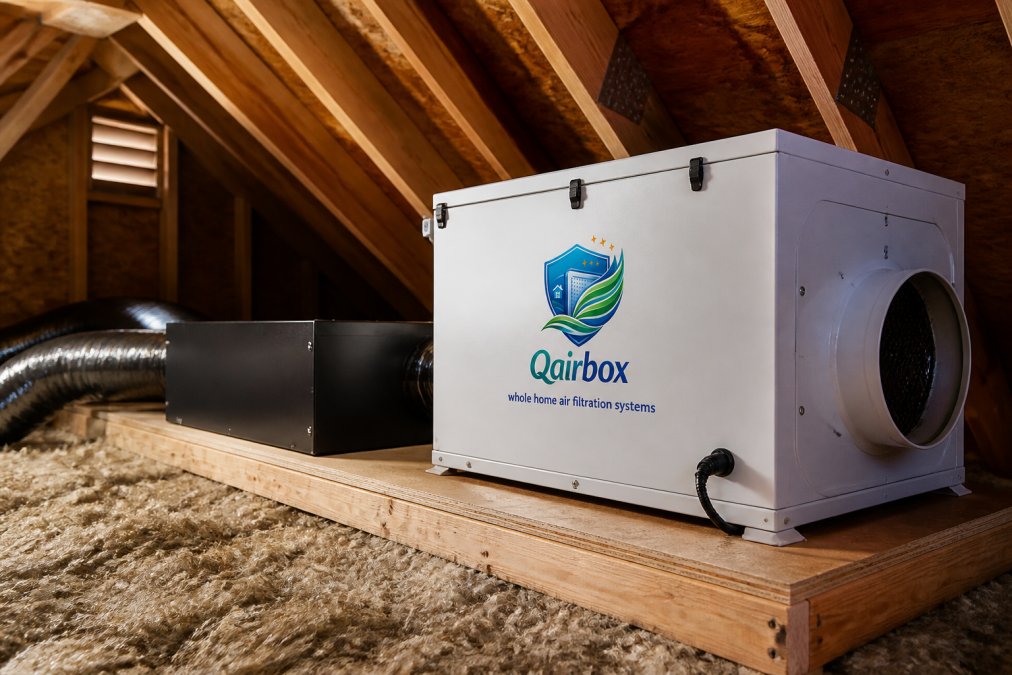
Table of Contents
- Why Desert Dust Demands Specialized Air Purification
- What to Look for in a Dust-Removing Air Purification System
- How to Reduce Dust in Desert Houses with Whole-Home Systems
- Indoor Air Quality for Desert Homes: Why Standalone Attic-Mounted Systems Work
- Whole-Home vs. Room Purifiers: Why One System Beats Many
- Key Features That Matter for Desert Environments
- Choosing the Right System for Your Home
- Conclusion
Last Updated: August 15, 2026
Why Desert Dust Demands Specialized Air Purification
Desert dust isn't like the dust you find in other climates. It's finer, more persistent, and packed with particulates that standard air filtration systems simply aren't designed to handle. When you live in a hot, dry climate, your home faces a constant barrage of airborne particles, silt, sand, mineral compounds, and other contaminants that settle on every surface and infiltrate indoor spaces through tiny gaps and air leaks.
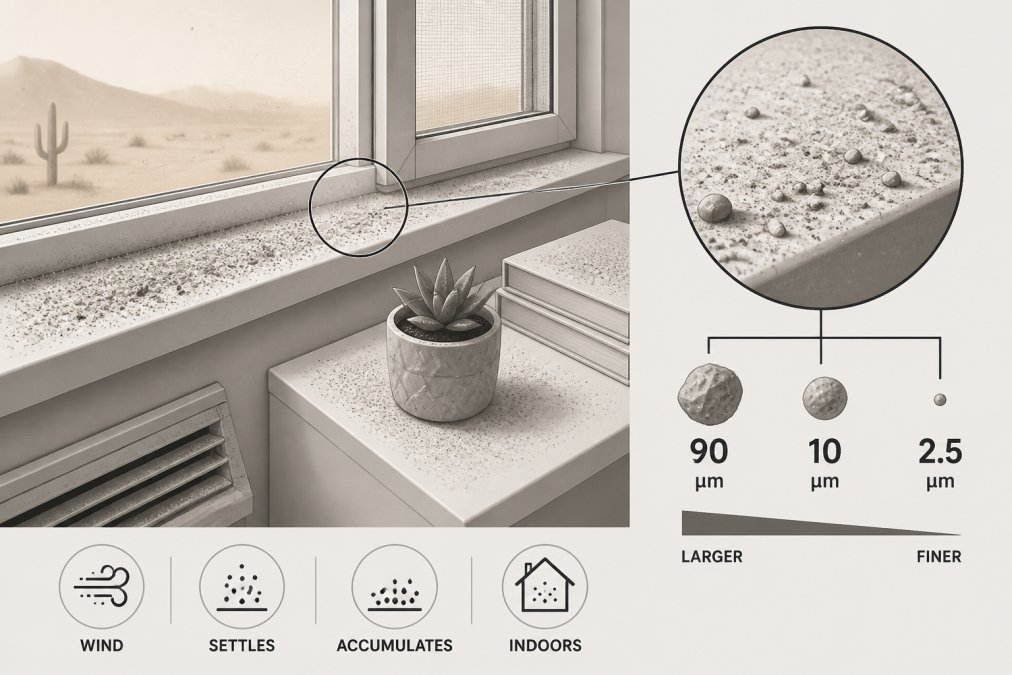
The problem intensifies in tightly sealed desert homes. These homes are built to keep cool air in and heat out, which means minimal air exchange with the outside. That's good for energy efficiency, but it also means airborne particles circulate inside repeatedly without escape. Families with allergies, young children, or older adults feel this most acutely. Respiratory irritation, allergy flare-ups, and persistent dust on furniture become daily frustrations.
Here's what most guides miss: a best air purification system for desert dust must address both the volume of particles entering your home and the speed at which they accumulate on filters. This is where whole-home air purification systems outperform room-based alternatives. A single system installed in your attic can treat air throughout your entire home continuously, capturing particulates before they settle into living spaces.
What to Look for in a Dust-Removing Air Purification System
When evaluating options for your home, focus on three core capabilities: filtration efficiency, air exchange capacity, and pre-filter durability. These factors determine whether a system will actually reduce dust in your living spaces or simply recirculate the same particles.
HEPA Filtration and Micron Capture
HEPA filtration is the industry standard for capturing fine particles. A true HEPA filter removes 99.97% of particles as small as 0.3 microns, small enough to trap dust, pollen, mold spores, and other airborne contaminants that trigger allergies and respiratory issues. In desert environments, this capability is non-negotiable.
The micron rating matters more than marketing claims. Particles visible to the naked eye are typically 10-100 microns. Desert dust and silt often fall in the 1-10 micron range, which means you need HEPA-grade filtration, not lower-tier filters. Budget options with "HEPA-like" claims won't capture the finer particulates that accumulate fastest in desert homes.
A whole-home system with HEPA filtration works differently than a room purifier. Rather than treating one space, it conditions air throughout your home, meaning allergen exposure drops across bedrooms, living areas, and kitchens simultaneously. For families with severe allergies, this comprehensive approach delivers measurable relief.
CADR Ratings and Air Exchange Rate
CADR, Clean Air Delivery Rate, measures how quickly a system removes specific pollutants from the air. It's expressed in cubic feet per minute (CFM) and tells you how many times the system can exchange the air in a given space per hour.
For desert dust, you need a system with adequate CADR for your home's total volume. A system that exchanges air too slowly won't keep pace with dust accumulation, especially during windy periods when outdoor particulates are highest. Most whole-home systems are sized to exchange your home's air 4-6 times per hour, which is substantially more effective than portable units that typically achieve 1-2 air changes per hour in a single room.
The room-by-room approach creates another problem: dust still settles in spaces the portable unit doesn't cover. A whole-home system eliminates this gap, treating hallways, bedrooms, and less-trafficked areas with the same intensity as high-traffic zones.
Pre-Filter Maintenance and Longevity
Pre-filters extend the life of your main HEPA filter by capturing larger particles first. In desert environments with heavy dust loads, a strong pre-filter system is essential, it's the difference between replacing your main filter every 6 months versus every 12-18 months.
Many homeowners overlook pre-filter maintenance, but in dusty climates, cleaning or replacing pre-filters regularly is what keeps your system running efficiently. A well-designed pre-filter should be washable or easily replaceable without requiring professional service. Systems that make pre-filter access difficult tend to get neglected, which degrades overall performance.
Filter longevity directly impacts your operating costs. A system with poor pre-filtration forces you to replace expensive HEPA filters more frequently. The best air purification system for desert dust includes accessible, durable pre-filtration that you can maintain yourself.
How to Reduce Dust in Desert Houses with Whole-Home Systems
Reducing dust in desert houses starts with understanding where it enters and how it circulates. A whole-home air purification system addresses this at the source, continuously filtering air before it settles on surfaces.
The mechanics are straightforward: air is drawn from throughout your home into the purification unit, passed through multiple filtration stages, and returned clean. Because the system runs 24/7, it continuously removes particulates, preventing the accumulation that creates visible dust on furniture and surfaces.
Placement matters. An attic-mounted system keeps the equipment out of sight and out of mind while serving your entire home. Unlike portable units that require placement in specific rooms and create visual clutter, a whole-home system operates silently in the background. This is particularly valuable in desert homes where dust is relentless, you get continuous filtration without rearranging your living spaces around an air purifier.
The system should run continuously during high-dust periods (typically spring and early summer in desert climates) and can operate on reduced settings during lower-particulate seasons. Smart air quality sensors can automate this, adjusting fan speed based on real-time indoor air quality measurements.
Indoor Air Quality for Desert Homes: Why Standalone Attic-Mounted Systems Work
Desert homes face unique indoor air quality challenges that require purpose-built solutions. A standalone whole-home air purification system installed in your attic addresses these challenges in ways that room purifiers cannot.
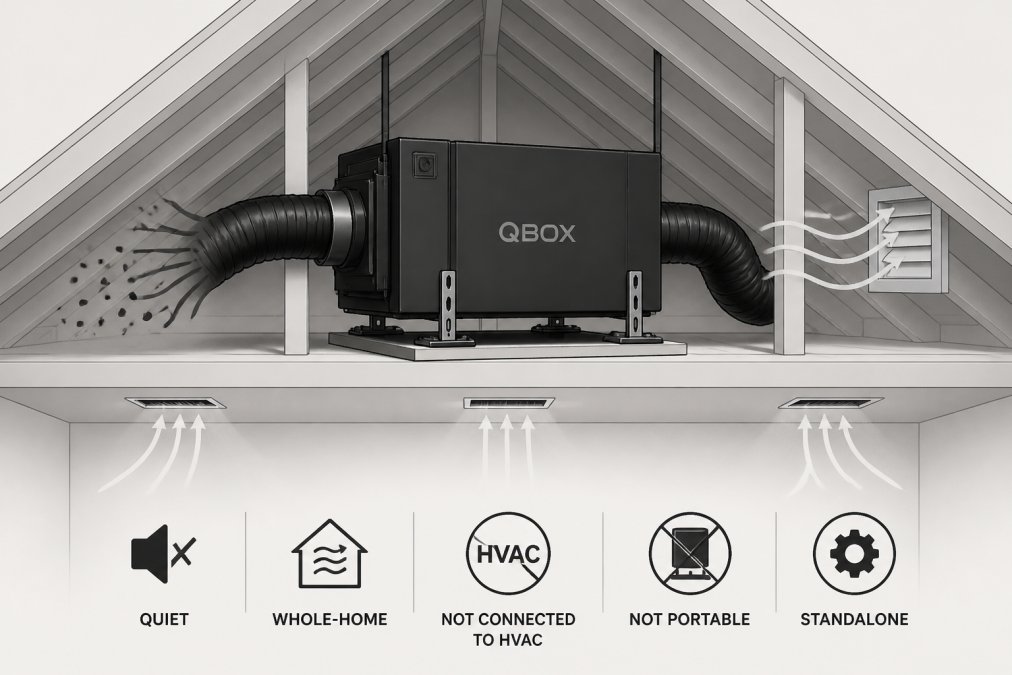
First, understand what "standalone" means: the system operates independently of your HVAC or central air conditioning. It doesn't modify, retrofit, or integrate with your existing heating and cooling equipment. This separation is critical. Your HVAC system is designed for temperature control, not air purification. A standalone system is purpose-built for filtration, with hospital-grade purification capabilities that residential HVAC systems don't offer.
The attic location provides several advantages. It's centrally positioned to serve your entire home, it's out of sight so it doesn't dominate your living spaces, and it operates quietly away from daily activities. The system runs continuously, meaning your home's air is being filtered 24/7 regardless of whether your HVAC is actively heating or cooling.
In tightly sealed desert homes, this continuous filtration is essential. Your home's envelope is designed to minimize outdoor air infiltration for energy efficiency, which means indoor air gets recirculated repeatedly. Without active purification, dust and allergens accumulate with each cycle. A whole-home system breaks this cycle, removing particulates before they have a chance to settle.
For allergy-sensitive households, the difference is dramatic. Instead of managing dust in individual rooms with multiple portable units, you get comprehensive, consistent air quality throughout your home. Bedrooms, bathrooms, kitchens, and living areas all benefit from the same hospital-grade filtration.
Whole-Home vs. Room Purifiers: Why One System Beats Many
The temptation to buy multiple room air purifiers is understandable, they're portable, require no installation, and promise targeted cleaning. But in desert environments, this approach creates more problems than it solves.
Room purifiers have fundamental limitations. Each unit only cleans the air in its immediate vicinity. A purifier in your bedroom doesn't clean the hallway, living room, or kitchen. Dust still accumulates in spaces the unit doesn't cover. You'd need to buy multiple units to achieve whole-home coverage, which means multiple filter replacements, multiple devices taking up floor space, and inconsistent air quality across your home.
The maintenance burden is substantial. Each room purifier has its own filter that needs monitoring and replacement. In a dusty desert climate, you might replace filters every 3-4 months per unit. With three or four room purifiers, that's frequent maintenance, cost, and hassle.
A single whole-home system eliminates these problems. One system, one filter replacement schedule, one maintenance routine. Air quality is consistent throughout your home because every room receives the same hospital-grade purification. The system operates silently in your attic, requiring no furniture rearrangement or visual accommodation in your living spaces.
The cost comparison favors whole-home systems when you factor in total ownership. Multiple room purifiers, each with ongoing filter costs, quickly exceed the investment in a single professionally installed whole-home system. Over five years, the maintenance savings alone justify the difference.
Key Features That Matter for Desert Environments
When evaluating a best air purification system for desert dust, focus on features specifically designed for high-particulate environments.
Multi-stage filtration is essential. Pre-filter, HEPA filter, and activated carbon stages work together to capture particles of different sizes and remove odors. In desert homes where cooking smells and outdoor dust combine, activated carbon makes a noticeable difference in air freshness.
Air quality sensors automate your system's operation. Instead of running at full capacity constantly, the system adjusts fan speed based on real-time particulate measurements. This reduces energy consumption while maintaining optimal air quality. When outdoor dust storms occur, the system automatically increases filtration intensity.
Quiet operation matters when a system runs 24/7. A system that produces excessive noise becomes an annoyance rather than a solution. Look for systems engineered for low-noise operation, typically under 50 decibels on normal settings.
Sealed system design prevents dust from bypassing the filtration stages. Some systems allow unfiltered air to leak around filters or through gaps in the housing. A properly sealed system ensures all air passes through the filtration media.
Accessibility for maintenance determines whether you'll actually keep up with filter care. Systems that require disassembly or professional service for routine maintenance often get neglected. Look for designs where pre-filters and main filters are easy to access and replace.
Choosing the Right System for Your Home
Your home's size and layout determine the system specifications you need. A system must have adequate CADR to achieve the recommended air exchange rate for your total home volume. An undersized system won't keep pace with dust accumulation; an oversized system wastes energy.
Consider your home's construction. Tightly sealed homes (common in desert climates for energy efficiency) need continuous filtration because air exchange with outdoors is minimal. Homes with more air leakage can tolerate lower-capacity systems, though in dusty climates, higher capacity is still preferable.
Allergy severity matters. Households with severe allergies benefit from higher CADR and more frequent air changes. Families with mild dust sensitivity might manage with lower-capacity systems, though in desert environments, higher performance is recommended.
Professional installation ensures proper sizing, placement, and integration with your home's structure. An attic-mounted system requires proper support, ventilation, and ducting to function optimally. Installation quality directly impacts long-term performance and reliability.
At Qairbox, we design whole-home air purification systems specifically for desert climates. Our standalone systems are professionally installed in your attic, operate quietly 24/7, and deliver hospital-grade purification throughout your entire home without modifying your existing HVAC or air conditioning. We've engineered our systems for the unique challenges of desert dust, aggressive filtration, durable pre-filters, and sealed system design that prevents bypass. For families struggling with dust, allergies, and indoor air quality in hot, dry climates, a purpose-built whole-home system delivers results that room purifiers simply cannot match.
Dust accumulation in desert homes is relentless, and room-based solutions create more maintenance burden than relief. A professionally installed whole-home air purification system addresses the root problem: continuous filtration of your entire home's air supply. Qairbox delivers hospital-grade purification designed for desert environments, hospital-grade filtration, durable pre-filters engineered for high-particulate loads, and sealed system design that ensures no dust bypasses the filtration stages. Schedule a consultation with Qairbox to learn how a whole-home system can transform your home's air quality and reduce the dust, odors, and allergens that affect your family's health and comfort.
Frequently Asked Questions
Do air purifiers really work to remove desert dust?
Yes, when properly sized and equipped with HEPA filtration and strong CADR ratings, air purification systems effectively capture fine dust and particulate matter. Desert dust contains fine silt and sand particles that standard household dust filters cannot handle. A whole-home air purification system with sealed design and adequate airflow capacity removes airborne particles throughout your entire home, not just in one room. Effectiveness depends on system capacity, filter quality, and maintenance frequency in high-particulate environments.
Why is desert dust harder to manage than standard household dust?
Desert dust contains finer particles, including silt and sand, that penetrate deeper into the lungs and settle more persistently indoors. These particles are smaller in microns and more abrasive than typical household dust, causing faster filter clogging and requiring robust pre-filtration systems. Tightly sealed desert homes trap this fine dust indoors, where it circulates continuously. Standard room purifiers struggle with the volume and particle composition, making a whole-home system with high air exchange rates and efficient pre-filter maintenance essential for managing desert dust effectively.
What are the benefits of a standalone attic-mounted air purification system?
A standalone attic-mounted system operates independently, out of sight and out of mind, delivering hospital-grade purification to your entire home 24/7. Unlike portable room units, it doesn't clutter living spaces and requires significantly less maintenance. It works alongside your existing HVAC without modification, handling high particulate loads common in desert environments. Professional installation ensures proper sealed system operation, optimal airflow, and consistent indoor air quality throughout every room. This approach eliminates the need for multiple units and provides centralized monitoring of air quality sensors.
How does professional installation improve air quality in desert homes?
Professional installation ensures your whole-home air purification system is sealed correctly, positioned for optimal air circulation, and integrated to maximize airflow capacity without disrupting your existing HVAC. Technicians account for your home's room volume, dust load, and particulate matter composition to calibrate fan speed settings and filter replacement cycles. Proper installation prevents air bypass, ensures adequate cubic feet per minute delivery, and establishes maintenance schedules suited to desert dust conditions. This expertise guarantees the system performs at rated CADR and captures fine particles efficiently from the moment it operates.