Cost of Professional Air Quality Testing: 2026 Guide
Table of Contents
- What Professional Air Quality Testing Costs
- Factors That Influence Air Quality Testing Prices
- Signs of Poor Indoor Air Quality
- Professional Testing vs. DIY Air Quality Kits
- What's Included in a Standard Air Quality Test
- Benefits of Whole-Home Air Purification After Testing
- When to Hire a Professional Air Quality Inspector
- Conclusion
- Frequently Asked Questions
Last Updated: September 27, 2026
What Professional Air Quality Testing Costs
The cost of professional air quality testing typically ranges from a few hundred to several thousand dollars, depending on the scope and complexity of the assessment. A basic indoor air quality test for a single room might cost less, while a comprehensive whole-home evaluation with multiple sampling points and laboratory analysis runs significantly higher. Most homeowners investing in professional testing are addressing specific concerns: dust infiltration in desert climates, allergen accumulation in sealed homes, or chemical off-gassing from new construction or furnishings.
Professional testing measures volatile organic compounds, particulate matter, mold spores, and other airborne contaminants that DIY kits cannot detect accurately. The investment in professional-grade air sampling and lab analysis gives you actionable data about what's actually circulating in your home, information that guides remediation decisions worth far more than the testing fee itself.
EPA guidance on indoor air quality assessment
Factors That Influence Air Quality Testing Prices
Several variables shape what you'll pay for professional air quality testing, and understanding each one helps you budget accurately and compare quotes from different providers.
Home Size and Sampling Locations
The square footage of your home directly affects the number of sampling points required for a representative assessment. A small single-story home might need 3-5 sampling locations, while a larger multi-story residence could require 8-12 or more. Each additional sampling point adds to labor costs and laboratory analysis fees.
Specific Contaminants Tested
A basic screening for particulate matter and common allergens costs significantly less than targeted testing for specific hazards. Radon testing requires specialized equipment and extended sampling periods (48 hours to several days), increasing technician time and lab fees. Asbestos, lead dust, volatile organic compounds (VOCs), and mold spore identification each add laboratory complexity and cost. Comprehensive panels testing multiple contaminant categories cost substantially more than single-focus tests.
Geographic Location and Market Competition
Urban and suburban areas with established air quality testing networks typically offer more competitive pricing than rural regions. Rural or remote areas may have fewer qualified testers, resulting in higher per-test costs or travel fees. Homes in desert climates with persistent dust infiltration may require more extensive testing protocols than homes in humid regions.
Turnaround Time and Reporting Depth
Standard laboratory analysis typically takes 1-2 weeks. Expedited processing carries a premium fee. Comprehensive reports with source identification, health risk assessment, and remediation recommendations cost more than basic reports listing pollutant concentrations.
Professional Credentials and Certifications
Testing performed by certified industrial hygienists or environmental professionals with advanced credentials typically costs more than testing by technicians with basic certifications. The added expertise and defensibility of results often justify the cost, especially if testing results will inform significant remediation investments or if health concerns are serious.
Signs of Poor Indoor Air Quality
Poor indoor air quality often announces itself through physical symptoms. Family members experiencing unexplained respiratory irritation, persistent allergies, or headaches that worsen indoors may be reacting to airborne contaminants. Allergy-sensitive households frequently notice these symptoms first, especially in desert climates where dust infiltration is relentless and homes are sealed tightly to maintain cooling efficiency.
Visible signs include dust accumulation that returns quickly after cleaning, musty odors suggesting mold or moisture problems, or persistent cooking and pet odors that normal ventilation doesn't eliminate.
Professional air quality testing identifies what your senses are detecting and quantifies the problem. Testing transforms vague concerns into specific, measurable data that justifies remediation investment.
Professional Testing vs. DIY Air Quality Kits
DIY air quality kits offer convenience and low upfront cost, but they come with significant accuracy limitations. Most consumer-grade kits measure only particulate matter or provide basic allergen screening. They cannot detect volatile organic compounds, radon, asbestos, or formaldehyde, contaminants that often pose the greatest health risks.
Professional testing uses calibrated diagnostic equipment operated by trained technicians. Lab analysis applies rigorous quality control standards that consumer kits cannot match. A professional test provides defensible, actionable data; a DIY kit provides a rough approximation that may miss the actual problems in your home.
If testing reveals significant contamination, you need confidence that the findings are accurate before investing in remediation. Professional testing gives you that assurance.
| Approach | Accuracy | Cost | Turnaround | Best For |
|---|---|---|---|---|
| Professional Testing | High precision, lab-verified | Higher upfront | 1-2 weeks | Comprehensive assessment, health concerns, remediation decisions |
| DIY Kits | Basic screening only | Low | Immediate to 1 week | Quick baseline check, budget-conscious initial screening |
For homeowners in desert climates dealing with chronic dust infiltration or families with allergy-sensitive members, professional testing justifies its cost by delivering reliable data that guides targeted remediation.
What's Included in a Standard Air Quality Test
A standard professional air quality test begins with a site assessment where the technician evaluates your home's layout, ventilation systems, and potential contamination sources. They'll identify sampling locations that represent different zones of your home, bedrooms, living areas, and kitchens typically receive separate sampling to capture variations in air quality across the house.
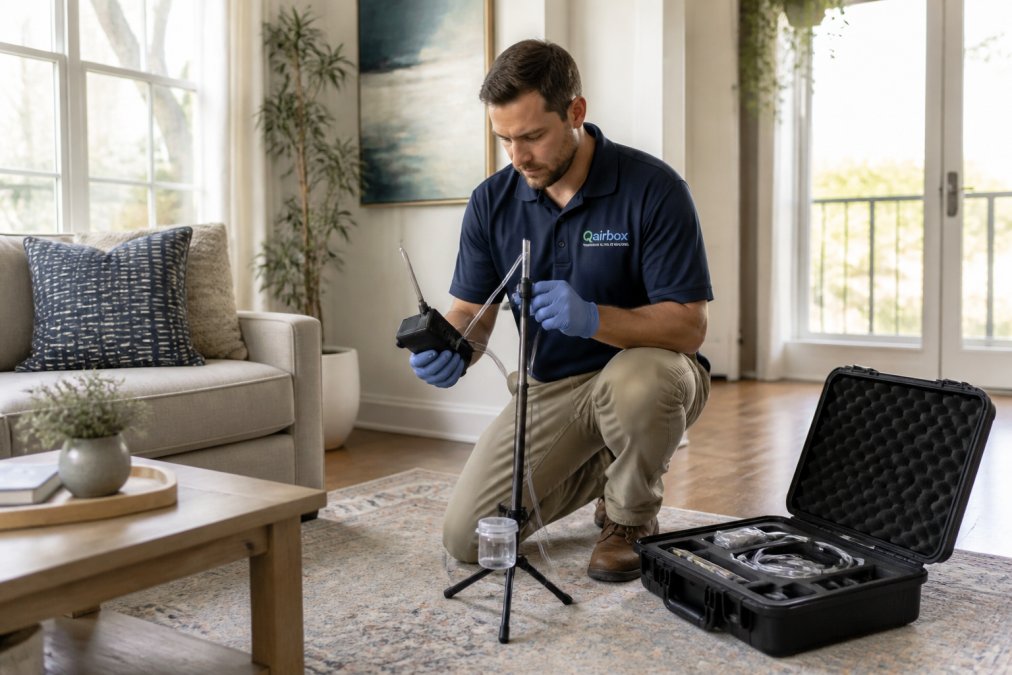
Air sampling itself involves collecting samples using specialized equipment that captures airborne particles and contaminants. The technician may use active sampling devices that draw air through collection media, or passive samplers that accumulate contaminants over time. Multiple samples ensure representative data rather than a single point-in-time reading.
Laboratory analysis examines collected samples using standardized testing protocols. Results quantify particulate matter, measure volatile organic compounds, identify mold spores, and screen for specific hazards like asbestos or lead dust. The lab provides detailed findings showing pollutant concentrations and how they compare to recommended exposure limits.
A comprehensive report interprets results and identifies likely contamination sources. Professional testing typically includes recommendations for remediation, whether that means improving ventilation, addressing moisture problems, removing specific sources of chemical off-gassing, or implementing whole-home air purification. Understanding what the numbers mean and how to respond to them is where professional expertise adds real value.
Benefits of Whole-Home Air Purification After Testing
Once professional testing reveals your home's air quality problems, the next decision is remediation. Many homeowners discover that their indoor air quality issues require ongoing management, not one-time fixes. Dust infiltration in desert climates, allergen accumulation in sealed homes, and persistent odors from cooking or pets all benefit from continuous air treatment.
A whole-home air purification system addresses airborne contaminants throughout your entire residence, not just in isolated rooms. Unlike portable units that treat single spaces, a standalone system installed in the attic operates continuously, filtering air as it circulates. This approach works particularly well for allergy-sensitive households and homes in dusty climates where outdoor air infiltration is a persistent problem.
The benefits extend beyond health. Continuous air purification reduces dust accumulation on surfaces, meaning less frequent cleaning. It eliminates persistent odors, cooking smells, pet odors, and chemical off-gassing, that linger in sealed homes. For families with young children or older adults, improved indoor air quality supports respiratory health and reduces allergy symptoms.
Professional installation ensures proper system integration and optimal performance. A whole-home solution requires no room-by-room management, no filter replacements in multiple units, and no noise from tabletop purifiers.
American Lung Association indoor air quality recommendations
When to Hire a Professional Air Quality Inspector
You should hire a professional air quality inspector when family members experience unexplained respiratory symptoms, allergies worsen indoors, or you notice persistent odors and dust accumulation despite regular cleaning. Homes in desert climates with tight sealing for cooling efficiency often benefit from professional assessment, the same sealed construction that keeps heat out can trap indoor pollutants.
How to Verify Professional Credentials
Conclusion
Professional air quality testing reveals what's actually circulating in your home, information that transforms vague indoor air concerns into actionable remediation decisions. The cost of professional testing is an investment in understanding your home's environmental health and making informed choices about improvement. For homeowners in desert climates dealing with dust infiltration, allergy-sensitive families, and anyone concerned about indoor air quality, professional assessment provides the data foundation for effective solutions.
Frequently Asked Questions
How much does professional air quality testing typically cost?
Professional air quality testing costs vary based on the scope, number of pollutants tested, and your location. Basic testing for common contaminants like particulate matter and carbon monoxide runs lower than comprehensive assessments that include radon, volatile organic compounds, and mold spores. Most homeowners invest in testing when they notice signs of poor indoor air quality or have health concerns. Contact local environmental testing firms for quotes tailored to your specific needs.
Is professional air quality testing worth the cost?
Yes, professional testing provides accurate lab analysis of your home's indoor environment, identifying airborne contaminants and pollutants that DIY kits cannot reliably detect. If household members experience respiratory issues, allergies, or you live in a dusty climate, testing reveals whether air quality is the culprit. Results guide decisions about remediation and help justify investments in solutions like whole-home air purification systems that deliver long-term health benefits.
What factors affect the price of home air quality testing?
Testing costs depend on the number and type of pollutants screened, carbon monoxide and formaldehyde testing costs less than radon or asbestos analysis. The size of your home, number of sample collection points, and whether you need ductwork sampling also influence pricing. Geographic location and the testing lab's credentials affect rates. Comprehensive assessments covering multiple contaminants and health hazards cost more than single-pollutant screening.
Can DIY air quality kits give accurate results compared to professional testing?
DIY kits provide rough indicators but lack the accuracy and methodology of professional lab analysis. Professional testing uses calibrated diagnostic equipment, proper sample collection techniques, and certified lab analysis to measure particulate matter, volatile organic compounds, and other airborne contaminants reliably. Professionals interpret results in context of your home's ventilation systems and air exchange rate. For health decisions, professional testing is more trustworthy than DIY alternatives.