How to Choose an Attic Air Purification System
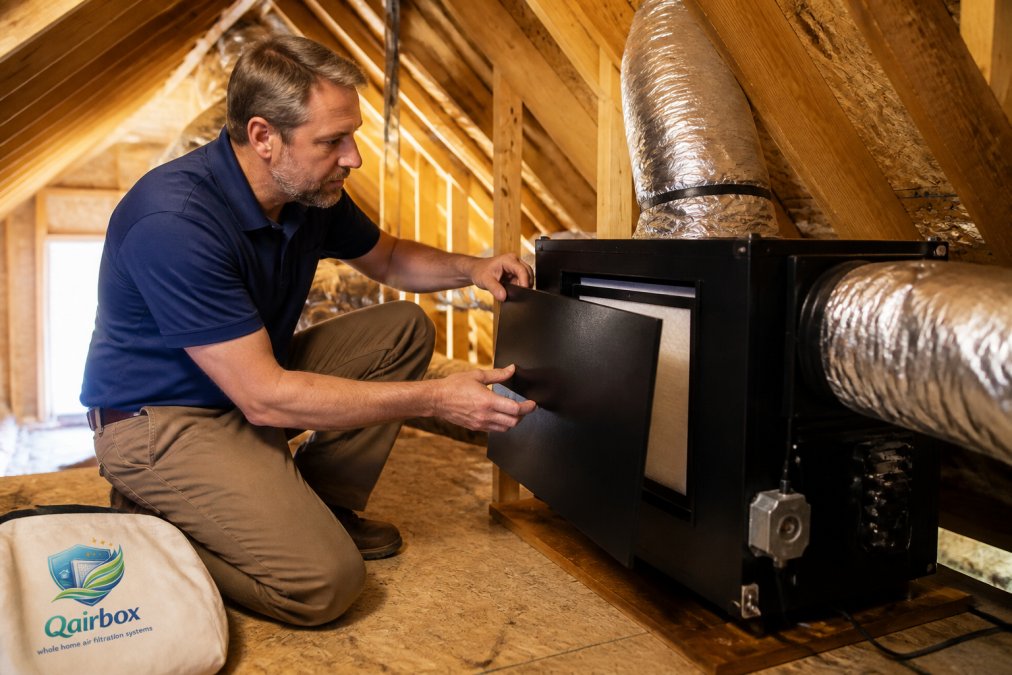
Table of Contents
- Understanding Attic Air Purification Systems
- Signs of Poor Indoor Air Quality in Your Home
- Key Specifications: CFM Rating, HEPA Filtration, and System Capacity
- Whole-Home Air Purification Benefits for Allergy-Sensitive Households
- Sizing Your Attic Air Purification System for Square Footage
- Professional Installation vs. Maintenance: What to Expect
- Making Your Final Decision
- Frequently Asked Questions
Last Updated: September 24, 2026
Understanding Attic Air Purification Systems
An attic air purification system is a standalone whole-home filtration unit installed in your attic that cleans the air throughout your entire house without modifying your existing HVAC or air conditioning system. Unlike portable room purifiers or furnace add-ons, this type of system runs independently 24/7, removing dust, allergens, odors, and airborne particles at the source before they circulate through your living spaces.
How It Works: Active Purification vs. Structural Ventilation
Many homeowners confuse attic air purification with attic ventilation. Attic ventilation (roof vents, soffit vents, ridge vents) is passive structural airflow that protects your roof and insulation but does not clean the air your family breathes. Active air purification is an electrically powered system that pulls air from your home, passes it through multiple filtration stages (pre-filter, HEPA, activated carbon), and returns cleaned air back to your living spaces. It operates independently 24/7 to remove contaminants before they settle on surfaces or get inhaled.
A whole-home attic air purification system draws air from your living spaces through intake vents, filters it through hospital-grade filtration media, and returns it via ducting. You never see it running or hear it, but you feel the results: less dust on surfaces, fewer allergy symptoms, and fresher air throughout every room.
Why Attic Installation Matters
Placing the purification unit in the attic offers three major advantages:
- Out of sight, out of mind: The system runs quietly in a space you don't occupy, eliminating the visual clutter and noise of room-based purifiers.
- Centralized filtration: A single unit serves your entire home, not just one bedroom or living room.
- Professional installation: Attic placement requires proper ducting, electrical work, and positioning for optimal airflow, work that must meet building codes and be done right the first time.
For homeowners in desert climates or those with allergy-sensitive family members, choosing the right attic air purification system can make a real difference in daily comfort and health. The key is understanding what makes one system work better than another for your specific home and needs.
What separates a truly effective attic air purification system from mediocre options comes down to three things: filtration power, system capacity, and how well it matches your home's size and air quality challenges.
Signs of Poor Indoor Air Quality in Your Home
Poor indoor air quality shows up in stuffy sinuses, dust settling on surfaces within days of cleaning, or cooking odors lingering for hours, signs your home needs air quality solutions.
Common signs include:
- Persistent odors that don't fade (cooking, pets, mustiness)
- Visible dust buildup on furniture and electronics
- Allergy symptoms that worsen indoors
- Stale or heavy air that feels thick
- Mold or mildew smells, especially in humid seasons
Desert homes present a unique challenge: tightly sealed construction traps indoor pollutants and dust infiltration is constant. Without active purification, particles accumulate quickly.
According to EPA guidance on indoor air quality, common household pollutants include particulate matter, volatile organic compounds (VOCs) from cleaning products and paints, pet dander, mold spores, and dust mites. A whole-home attic air purification system addresses all of these by pulling air through multiple filtration stages before it returns to your living spaces.
Families with young children or older adults benefit most from addressing these issues early. Poor air quality affects sleep quality, respiratory health, and overall comfort, especially for sensitive individuals.
Key Specifications: CFM Rating, HEPA Filtration, and System Capacity
When evaluating an attic air purification system, three specifications matter most: CFM rating, filtration type, and total system capacity.
CFM (Cubic Feet per Minute) measures how much air the system moves per minute. For most residential homes, you need enough CFM to exchange all the air in your house 3-5 times per day. Calculate your home's total cubic footage, then match a system with adequate CFM to handle that volume.
HEPA filtration captures 99.97% of particles down to 0.3 microns, including dust, pollen, pet dander, and mold spores. For allergy-sensitive households, HEPA is non-negotiable. Many systems layer HEPA with pre-filters and activated carbon to also remove odors and chemical irritants.
System capacity refers to how much total filtration the system provides before filters need replacement. A larger capacity means longer intervals between maintenance, a major advantage of whole-home systems over room purifiers, where you're constantly swapping filters.
| Specification | What It Means | Why It Matters |
|---|---|---|
| CFM Rating | Air volume moved per minute | Determines how often air gets cleaned; higher = faster circulation |
| HEPA Filter | Captures 99.97% of particles 0.3+ microns | Essential for allergies and dust removal |
| Filter Capacity | Total filtration before replacement | Longer intervals = lower maintenance burden |
| Energy Efficiency | Power consumption in watts | Affects monthly utility costs |
When comparing systems, balance CFM with filtration quality. Excellent filtration with insufficient CFM won't keep air clean; high CFM with weak filtration wastes energy without results.
Whole-Home Air Purification Benefits for Allergy-Sensitive Households
Families dealing with allergies experience immediate relief from a properly sized whole-home attic air purification system. Unlike room purifiers that clean only one space, a whole-home system means cleaner air everywhere.
The benefits extend beyond allergies:
- Odor elimination: Cooking smells, pet odors, and musty air get removed continuously
- Dust reduction: Less frequent dusting and cleaning needed
- Better sleep: Cleaner air means fewer nighttime allergy symptoms
- Improved respiratory health: Reduced airborne irritants benefit everyone, especially children and older adults
- Lower maintenance: One professional system beats managing multiple room purifiers
Allergy-sensitive households often find that a whole-home attic air purification system reduces medication dependency.
Sizing Your Attic Air Purification System for Square Footage
Example calculation:
- Home size: 2,000 sq ft × 9 ft ceiling = 18,000 cubic feet
- Desired air changes: 4 per day
- Required CFM: (18,000 × 4) ÷ 60 = 1,200 CFM
Other factors: number of pets, cooking frequency, local climate and dust levels, and home age and seal quality.
Professional Installation vs. Maintenance: What to Expect
A whole-home attic air purification system requires professional installation. This is not a DIY project, and understanding why is crucial to making an informed decision.
Why Professional Installation Is Non-Negotiable
Attic-mounted air purification systems require 120V or 240V electrical connections that must be installed by a licensed electrician and inspected to meet the National Electrical Code (NEC). Improper wiring creates fire hazards and voids warranties. The system's placement and ducting must also comply with local building codes. A professional installer ensures your system passes inspection.
What the Installation Process Looks Like
A professional installation typically unfolds in these stages:
-
Pre-installation assessment (30-60 minutes): The technician evaluates your attic space, checks electrical capacity, identifies unit placement, and discusses ducting routes to right-size the system.
-
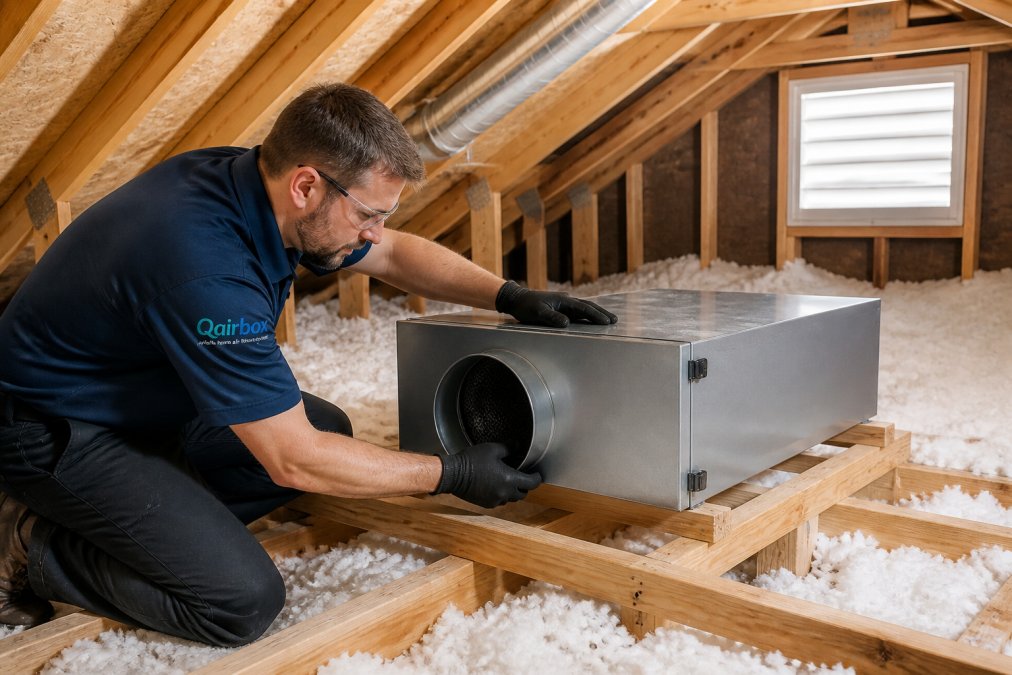
Unit positioning and mounting (2-3 hours): The system is positioned on a vibration-dampening base to minimize noise transmission to living spaces below. Mounting must be secure and level to ensure proper operation.
-
Ducting installation (2-4 hours): Flexible or rigid ducting connects the unit's intake and return ports. All connections are sealed with mastic sealant to prevent air leakage.
-
Electrical connection (1-2 hours): A licensed electrician runs wiring from your electrical panel to the unit, installs a dedicated circuit breaker, and connects the system. This work must be inspected by your local building department before the system operates.
-
Testing and commissioning (30-60 minutes): The technician powers on the system, verifies airflow, checks for leaks, tests filtration stages, and confirms noise levels are acceptable. You'll receive a walkthrough on how to monitor performance and access filter status.
Total installation time: 6-10 hours, typically completed in one day.
Maintenance: Simplicity Is the Advantage
Once installed, maintenance is straightforward and infrequent compared to managing multiple room purifiers.
Filter replacement process:
- Access the unit in your attic (the technician will show you how)
- Remove the old filter cartridge
- Insert the new filter (filters are standardized and widely available)
- Reset the filter-life indicator if your system has one
- Total time: 10-15 minutes
The DIY Temptation: Why It Fails
DIY installation almost always backfires: unlicensed electrical work violates codes and voids warranties, incorrect ducting reduces effectiveness, and safety risks include working at height and handling electrical connections. Unpermitted work can complicate home sales.
Making Your Final Decision
Choosing an attic air purification system comes down to matching your home's needs with the right system specifications and installation partner.
Frequently Asked Questions
What is the difference between attic ventilation and attic air purification?
Attic ventilation moves air through your attic space to manage temperature and moisture, typically through ridge vents and soffit vents. An attic air purification system actively filters airborne particles, allergens, and contaminants from the air circulating through your entire home. A whole-home attic-mounted purification system works independently to remove dust, pollen, and chemical irritants, making it ideal for allergy-sensitive households and homes in dusty climates.
How do I know if my home needs a whole-home air purification system?
Signs include persistent allergy symptoms indoors, visible dust accumulation despite regular cleaning, lingering cooking or pet odors, respiratory discomfort, or a musty smell suggesting poor indoor air quality. If you live in a desert climate with high particulate matter, have family members with allergies, or own pets, a whole-home system can significantly improve your air quality. A professional assessment can determine whether your current indoor air quality warrants purification.
Will a standalone attic air purification system work with my existing HVAC system?
Yes. A standalone whole-home attic-mounted air purification system operates independently and does not require modification to your existing HVAC or central A/C system. It runs on its own 24/7, delivering purified air throughout your home without disrupting your current heating and cooling setup. This makes it ideal for homeowners who want to improve air quality without replacing or retrofitting existing equipment.
What maintenance does an attic air purification system require?
Professional-grade whole-home systems typically require periodic filter replacements and routine inspections to maintain optimal performance. Unlike multiple portable room purifiers, a single attic-mounted system minimizes maintenance burden across your entire home. Your installer will provide a maintenance schedule. Regular upkeep ensures consistent allergen removal and system efficiency.