How Humidity Affects Indoor Air Quality
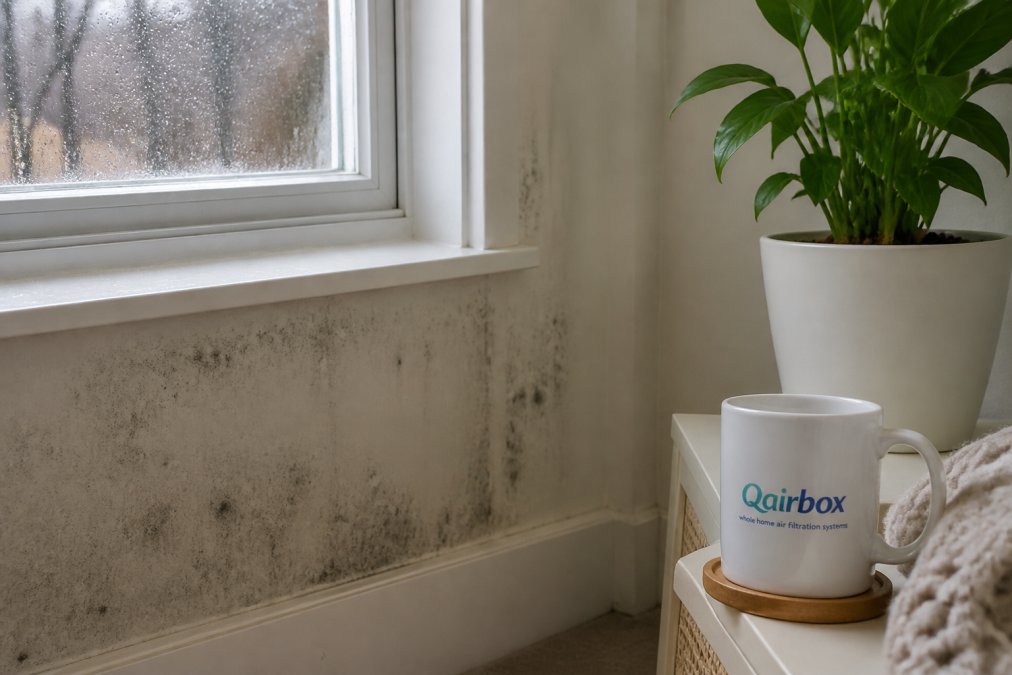
Table of Contents
- How Humidity Directly Impacts Indoor Air Quality
- Ideal Indoor Humidity Levels for Home Health
- Health Effects of High Indoor Humidity
- Low Humidity and Its Air Quality Consequences
- Humidity's Role in Structural Damage and Indoor Climate
- Controlling Humidity to Improve Air Quality
- Frequently Asked Questions
Last Updated: September 20, 2026
How Humidity Directly Impacts Indoor Air Quality
The connection between humidity and indoor air quality is more direct than most homeowners realize, making humidity indoor air quality management essential for home health. When moisture levels in your home drift outside the ideal range, they don't just make the air feel uncomfortable, they actively degrade the quality of what you're breathing. High humidity creates an environment where mold spores, dust mites, and other airborne pollutants thrive. Low humidity, conversely, concentrates particles in the air and can damage your respiratory system over time. Understanding this relationship is the first step toward creating a healthier home environment.
Understanding how humidity directly affects indoor air quality is crucial for homeowners. The problem isn't just comfort, it's health. When humidity levels fluctuate, they trigger a cascade of air quality issues that no single room purifier can fully address.
The Connection Between Moisture and Airborne Pollutants
High moisture in your home becomes a breeding ground for biological contaminants. Mold spores, dust mites, and bacteria all proliferate in humid conditions. These organisms release allergens and irritants into the air, which then circulate throughout your home. The moisture itself doesn't cause these pollutants, it enables them to multiply exponentially. What makes this particularly insidious is that many homeowners don't realize the connection. They notice more allergic reactions or respiratory irritation but attribute it to seasonal changes rather than the humidity levels they've allowed to creep upward.
Airborne particulate matter also behaves differently depending on moisture levels. In dry air, particles remain suspended and travel further through your home. In humid air, moisture clings to particles, making them heavier and causing them to settle on surfaces, but also making them easier to inhale deeply into your lungs when you do breathe them in. The relative humidity in your home essentially determines how aggressively these particles move through the air you breathe.
Why High Humidity Makes Air Feel Stagnant
When humidity climbs above 50 percent, the air takes on a heavy, stagnant quality. This isn't just perception. High moisture reduces the amount of oxygen your body can extract from each breath, which is why humid air feels harder to breathe. Your home's ventilation systems struggle to move air efficiently through saturated conditions. The result is perceived air quality that feels noticeably worse, stuffy, thick, and uncomfortable.
This stagnant feeling correlates directly with increased concentrations of volatile organic compounds (VOCs) and other chemical irritants. Without proper air movement and humidity control, these compounds accumulate rather than disperse. Families with young children or older adults often report this effect most acutely, as these populations are more sensitive to air quality fluctuations.
Ideal Indoor Humidity Levels for Home Health
The science is clear on what works best for human health and home integrity: the sweet spot for indoor humidity is between 30 and 50 percent relative humidity. This range balances respiratory health, structural integrity, and microbial control. When humidity dips below 30 percent, you're in dry air territory. When it climbs above 50 percent, you've entered the zone where mold, dust mites, and other biological growth accelerates.
The 30-50% Sweet Spot
Relative humidity between 30 and 50 percent represents the Goldilocks zone for indoor environments. At these levels, mold spores cannot germinate effectively. Dust mites struggle to reproduce. Bacteria and viruses have reduced viability in the air. Simultaneously, your respiratory system functions optimally, you're not losing moisture through excessive evaporation, and you're not struggling to extract oxygen from saturated air.
The practical benefit is measurable. Families maintaining humidity in this range report fewer respiratory issues, fewer allergic reactions, and noticeably better perceived air quality. Your home also maintains its structural integrity, wood doesn't warp excessively, drywall doesn't develop moisture damage, and your building envelope stays sound. This is why building codes and health organizations consistently recommend this range.
For homes in desert climates, maintaining the lower end of this range (30-40 percent) often makes more sense. The naturally dry air means you're fighting against evaporation constantly. For humid regions, targeting 40-50 percent provides better respiratory comfort while still preventing mold growth.
Monitoring Humidity in Your Home
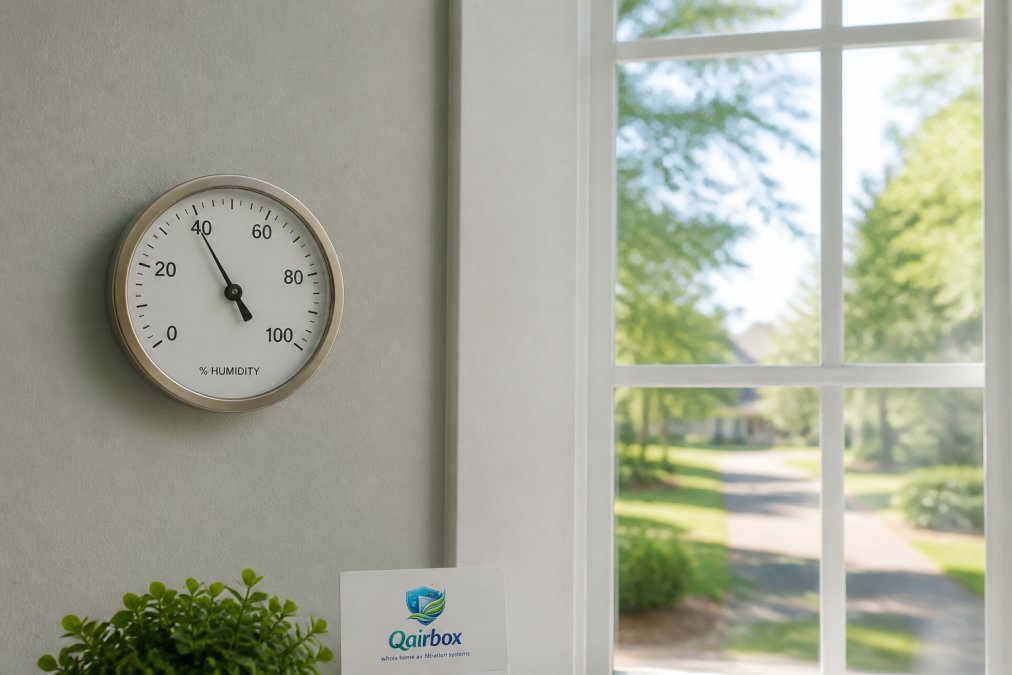
A hygrometer is an inexpensive tool that measures relative humidity in your home. Digital hygrometers cost under thirty dollars and provide accurate readings within minutes. Place one in your main living area, another in your bedroom, and a third in any area prone to moisture, bathrooms, kitchens, or basements. This gives you a clear picture of where humidity problems exist.
Smart home systems can now integrate humidity monitoring into your overall indoor air quality strategy. Some systems alert you when humidity drifts outside your target range, allowing you to respond before conditions deteriorate. For homeowners serious about maintaining optimal humidity indoor air quality, continuous monitoring becomes essential. You can't control what you don't measure.
Health Effects of High Indoor Humidity
When indoor humidity climbs above 50 percent, health consequences emerge quickly. The biological and chemical changes in your air create measurable impacts on respiratory function, allergic responses, and overall wellness.
Mold Growth and Respiratory Issues
Mold thrives in humid environments. Once humidity exceeds 50 percent consistently, mold spores begin to germinate on surfaces throughout your home, walls, ceilings, bathrooms, and anywhere moisture accumulates. These spores enter the air and your lungs. For people with asthma, mold exposure triggers bronchial constriction and difficulty breathing. For those without diagnosed respiratory conditions, mold exposure can cause chronic coughing, wheezing, and persistent respiratory irritation.
The respiratory impact extends beyond allergic reactions. Mold produces mycotoxins, compounds that damage lung tissue directly. Extended exposure to high-humidity environments where mold proliferates has been linked to the development of respiratory conditions in previously healthy individuals. This is particularly concerning for families with young children, whose lungs are still developing, or older adults with compromised immune function.
Dust Mites and Allergic Reactions
Dust mites are microscopic organisms that feed on dead skin cells. They thrive exclusively in humid environments, they cannot survive when relative humidity drops below 50 percent. In homes with humidity above 50 percent, dust mite populations explode. These organisms produce allergens in their feces that trigger allergic reactions ranging from mild sneezing to severe asthma attacks.
The allergic response to dust mites is one of the most common indoor allergens affecting families.
Low Humidity and Its Air Quality Consequences
While high humidity creates obvious problems, low humidity, below 30 percent relative humidity, creates different but equally serious air quality issues. Dry air concentrates airborne particles, irritates respiratory tissues, and can actually increase the transmission of certain airborne pathogens.
Humidity's Role in Structural Damage and Indoor Climate
Beyond health effects, humidity directly impacts your home's structural integrity and overall indoor climate. Excessive moisture causes wood to swell and warp. It promotes rot in structural components. It creates conditions where mold damages drywall, insulation, and building materials. Over time, high humidity transforms a sound home into one with serious structural problems.
Controlling Humidity to Improve Air Quality
Managing humidity requires a systematic approach. Simply opening windows occasionally won't solve the problem. You need consistent, reliable humidity control that operates continuously, regardless of outdoor conditions.
Ventilation and Air Exchange
Proper ventilation helps regulate humidity by exchanging indoor air with outdoor air. However, ventilation alone has limitations. In humid climates, bringing in outside air during humid months actually increases indoor humidity rather than reducing it. In dry climates, ventilation can rapidly dry out your home. Effective humidity control requires more than just ventilation, it requires active moisture management.
Whole-Home Air Purification Solutions
A whole-home air purification system addresses humidity and air quality comprehensively. Unlike portable room purifiers that handle only a single space, a whole-home system like Qairbox operates continuously throughout your entire residence. Installed professionally in your attic and operating independently of your existing HVAC system, a whole-home purifier removes airborne particles, volatile organic compounds, and biological contaminants from every room simultaneously.
| Humidity Level | Air Quality Impact | Health Effect | Structural Risk |
|---|---|---|---|
| Below 30% | Particles concentrated, dry irritation | Respiratory irritation, increased infection risk | Wood cracking, material shrinkage |
| 30-50% | Optimal particle suspension, minimal biological growth | Respiratory health supported, allergen control | Structural integrity maintained |
| Above 50% | Mold spore germination, dust mite proliferation | Allergic reactions, asthma triggers, respiratory damage | Mold damage, wood warping, rot |
| Humidity Control Method | Coverage | Effectiveness | Maintenance |
|---|---|---|---|
| Portable dehumidifier | Single room | Limited to one space | Frequent filter changes |
| Whole-home air purification | Entire residence | Continuous 24/7 operation | Minimal maintenance |
| Ventilation alone | Variable | Insufficient in humid climates | Ongoing monitoring needed |
EPA guidance on indoor air quality and humidity control
American Lung Association information on mold and respiratory health
CDC recommendations on indoor humidity and disease transmission
Frequently Asked Questions
What is the ideal humidity level for indoor air quality?
The ideal indoor humidity level ranges from 30-50% relative humidity. This sweet spot balances comfort and health. Levels above 50% promote mold spores and dust mite proliferation, while below 30% causes dry air that irritates respiratory passages. A hygrometer helps you monitor your home's relative humidity and maintain this optimal range for better indoor air quality.
How does high humidity affect allergies and respiratory health?
High indoor humidity above 50% creates an environment where mold spores, dust mites, and other pathogens thrive. These allergens trigger allergic reactions, asthma symptoms, and respiratory issues, especially in allergy-sensitive families. Moisture also allows volatile organic compounds (VOCs) and other chemical irritants to remain suspended in the air longer, worsening perceived air quality and making breathing more difficult.
Is 70% humidity inside a house bad for air quality?
Yes. At 70% relative humidity, your home exceeds the ideal range and becomes a breeding ground for mold growth, bacterial proliferation, and dust mites. This moisture level significantly degrades indoor air quality and increases respiratory issues, eye symptomatology, and allergic reactions. Condensation forms on windows and surfaces, accelerating structural damage while microbial growth accelerates, making the air feel stuffy and contaminated.
Can ventilation systems and air purification help manage humidity and improve indoor air quality?
Yes. Proper ventilation systems increase air exchange rates, reducing moisture buildup and removing airborne pollutants. Whole-home air purification systems work alongside humidity control to capture particulate matter, mold spores, and chemical irritants throughout your entire residence. A standalone whole-home solution installed professionally can run 24/7 to maintain consistent air quality.