HVAC System Air Quality Upgrades: A 2026 Guide
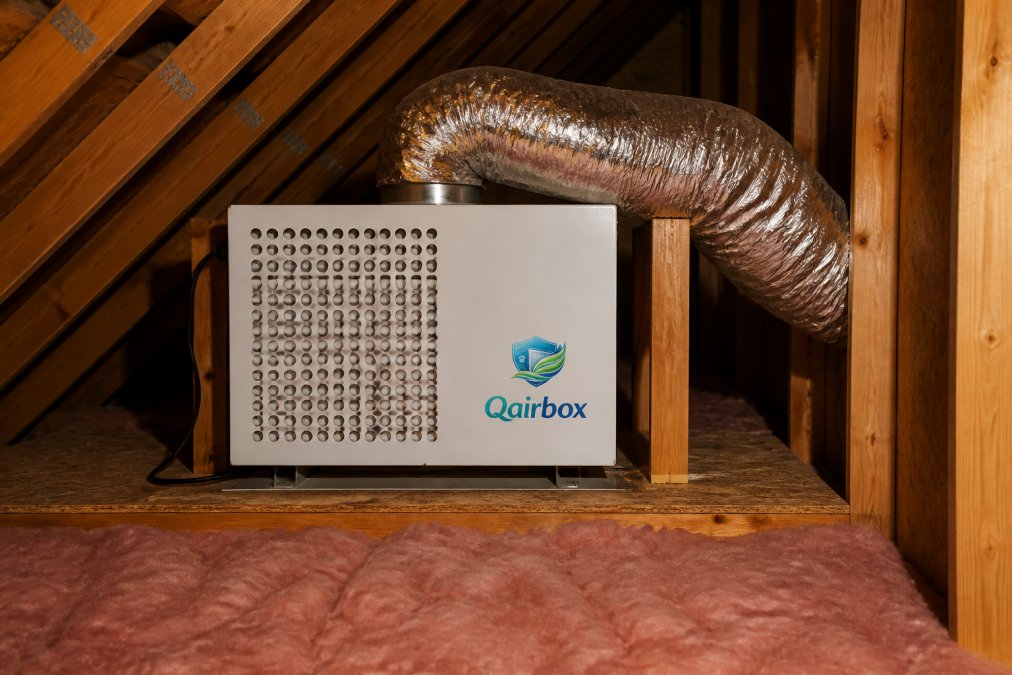
Table of Contents
- Understanding Your Current Air Quality Baseline
- High-Efficiency Air Filtration Beyond Standard HVAC Filters
- Whole Home Air Purification System Options
- Indoor Air Quality for Allergy Sufferers: Targeted Solutions
- Humidity Control and Ventilation Upgrades
- Attic-Mounted Air Purifier Benefits and Installation
- Professional Installation of Whole-Home Air Systems
- Evaluating Cost-Benefit and System Compatibility
Last Updated: August 21, 2026
Understanding Your Current Air Quality Baseline
Before investing in air quality upgrades, understand what you're actually dealing with. Indoor air quality often deteriorates significantly compared to outdoor air, especially in hot, dusty desert climates where homes are sealed tight against extreme heat.
Indoor air quality (IAQ) refers to the concentration of pollutants circulating through your living spaces: particulate matter (dust, pollen, pet dander), volatile organic compounds (VOCs) from cleaning products and furnishings, airborne pathogens, odors, and chemical irritants. In tightly sealed desert homes, these contaminants accumulate because there's limited fresh air exchange. You can't fix what you don't measure.
Assess your home's current condition: Does dust settle quickly on surfaces? Are allergies worse indoors than outdoors? Do cooking odors linger for hours? These signs indicate your current system isn't adequately filtering contaminants. If you have young children, older adults, or family members with allergies, poor IAQ directly impacts their health and comfort.
Desert homes face unique challenges: fine dust infiltration, extreme temperature swings that stress HVAC systems, and sealed construction that traps indoor pollutants. Understanding whether your issue is primarily dust, allergens, odors, or chemical irritants will guide which air quality upgrades make sense for your situation.
High-Efficiency Air Filtration Beyond Standard HVAC Filters
Standard HVAC filters are designed primarily to protect equipment, not to clean the air you breathe. They capture only larger particles and do little to address allergens, VOCs, or fine dust.
High-efficiency filtration systems use HEPA (High-Efficiency Particulate Air) technology, which captures 99.97% of particles as small as 0.3 microns, including pollen, dust mites, pet dander, and airborne pathogens. However, many existing HVAC systems can't handle the airflow restriction that HEPA filters create without significant modifications. You can't simply drop a HEPA filter into your existing furnace and expect efficient operation; the system needs to be designed for it from the start.
Beyond HEPA, activated carbon filtration addresses VOCs and odors by trapping chemical irritants that HEPA filters can't catch. For families dealing with cooking odors, pet smells, or off-gassing from new furniture, this dual-layer approach is essential.
Whole Home Air Purification System Options
When considering air quality improvements, you'll encounter several different approaches. Understanding the distinctions is crucial because they work very differently.
Traditional HVAC-integrated solutions attempt to work within your existing central air system, sitting in return air ductwork or at the furnace. While appealing because they use existing equipment, they come with real limitations. Your HVAC system was designed for a specific airflow rate and filter type. Upgrading the filter often reduces efficiency, increases strain on the blower motor, and may not deliver expected filtration performance. Additionally, they only filter air when your HVAC system is running, which may not be continuous in milder seasons.
Standalone whole-home air purification systems operate independently of your HVAC system, they don't connect to it, modify it, or rely on it. A professionally installed attic-mounted system runs continuously on its own schedule, delivering hospital-grade filtration throughout your entire residence 24/7. Because it's purpose-built for air purification rather than retrofitted onto equipment designed for climate control, it achieves significantly higher filtration efficiency without compromising your HVAC performance.
For homeowners in desert climates with tightly sealed homes, a standalone whole-home air purification system offers a critical advantage: it operates independently of your HVAC system's cycling, ensuring consistent air cleaning even during seasons when air conditioning isn't running continuously.
Portable room purifiers are fundamentally limited, they clean only the room they're in, require manual placement, consume floor space, and create noise in living areas. For comprehensive home coverage, you'd need multiple units, which becomes expensive and impractical.
Indoor Air Quality for Allergy Sufferers: Targeted Solutions
For families with allergies, indoor air quality isn't a luxury, it's a health necessity. Allergen reduction requires a systematic approach because allergens are persistent and pervasive.

The most effective strategy combines multiple layers. Start with source control: keep windows closed during high pollen seasons, use HEPA-filter vacuum cleaners, wash bedding frequently in hot water, and manage pet dander through grooming and designated pet-free zones. These steps reduce the total allergen load your air purification system must handle.
But source control alone isn't enough, especially for severe allergies. Continuous filtration that captures allergens before they circulate is essential. A system that runs 24/7 with HEPA filtration progressively reduces allergen concentrations in your home's air. Many allergy sufferers report symptom improvement within the first two weeks of installing a high-efficiency whole-home air purification system, with continued improvement as accumulated allergens are removed.
Humidity control also plays a role in allergen management. Dust mites thrive in humid environments, and mold grows readily above 60% relative humidity. Maintaining humidity between 30-50% through proper ventilation reduces both dust mite populations and mold growth.
Humidity Control and Ventilation Upgrades
Indoor air quality involves more than filtering particles, it requires managing moisture. In sealed homes, cooking, showers, laundry, and occupant respiration generate moisture that becomes trapped.
Relative humidity above 60% promotes dust mites and mold growth; below 30% causes respiratory irritation. The ideal range is 30-50%. Achieving this requires ventilation and, in many cases, dehumidification.
Traditional HVAC systems recirculate the same air without introducing fresh outdoor air, allowing contaminants to accumulate. A heat recovery ventilator (HRV) or energy recovery ventilator (ERV) exchanges indoor air for fresh outdoor air while recovering thermal energy from outgoing air. For desert homes, an ERV is particularly valuable because it exchanges moisture as well as heat, maintaining better humidity balance while improving ventilation efficiency.
However, ventilation upgrades to existing HVAC systems are complex and expensive, requiring ductwork modifications and compatible equipment. A standalone whole-home air purification system offers a practical advantage: it delivers comprehensive air cleaning without requiring ventilation system modifications.
Attic-Mounted Air Purifier Benefits and Installation
An attic-mounted whole-home air purification system represents a fundamentally different approach to improving indoor air quality. Rather than attempting to upgrade your existing HVAC system, it operates as a completely independent system designed specifically for air purification.
The benefits are substantial. First, it doesn't interfere with your existing HVAC system, your air conditioning, heating, and ventilation continue operating exactly as designed. The air purification system works in parallel, delivering continuous filtration regardless of whether your HVAC system is running. This is particularly valuable in desert climates where you might run air conditioning intermittently.
Second, attic installation keeps the system out of sight and out of mind. Unlike portable room purifiers that consume floor space and create noise in living areas, an attic-mounted system operates quietly in a space you don't occupy.
Third, a standalone system designed for whole-home coverage delivers superior filtration efficiency. Because it's purpose-built for air purification, it achieves hospital-grade filtration while maintaining excellent airflow without straining other home systems.
Installation requires professional expertise. The system must be properly positioned for optimal airflow distribution, securely mounted, and integrated with your home's electrical system. Professional installation ensures the system operates at peak efficiency and performs as designed. The installer will assess your home's layout, calculate airflow requirements, and ensure effective coverage throughout your residence.
Professional Installation of Whole-Home Air Systems
Installing a whole-home air purification system is more complex than placing a unit in a room. Professional installation ensures peak efficiency and delivers expected air quality improvements.
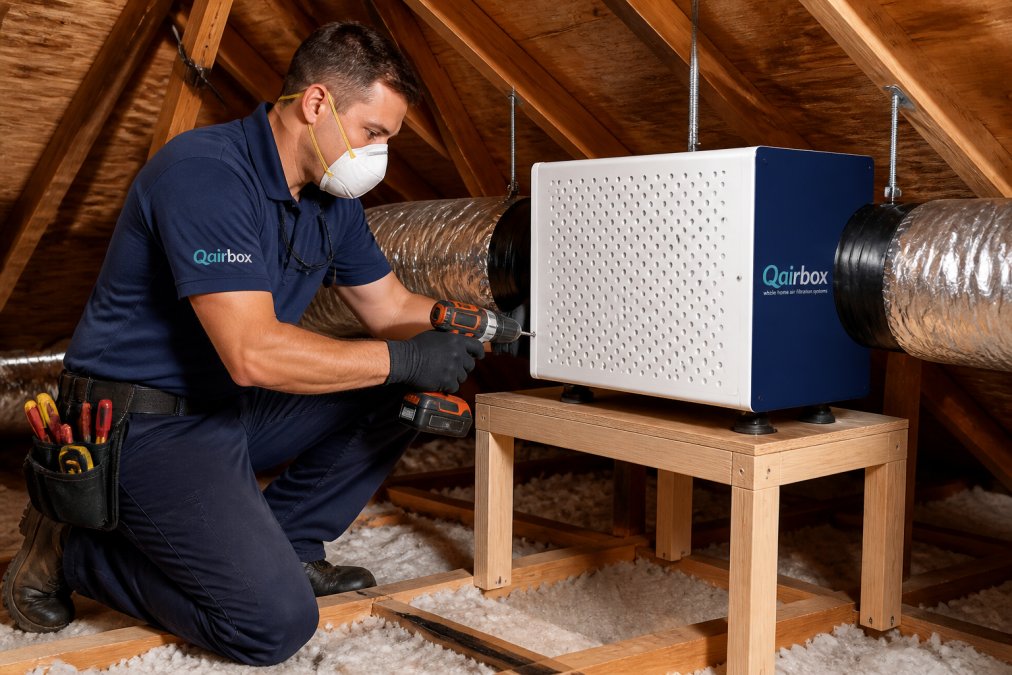
The process begins with a professional assessment of your home. The installer evaluates your home's size, layout, existing HVAC configuration, and air quality challenges to determine system sizing, optimal placement, and ductwork routing. Proper sizing is critical, an undersized system won't deliver adequate filtration, while an oversized system wastes energy.
Physical installation involves securing the unit in the attic where it won't interfere with insulation or create thermal problems. Ductwork must be properly routed to deliver filtered air throughout the home, with all connections sealed to prevent leaks that reduce efficiency. Electrical connections must meet code requirements and be properly grounded.
Configuration and testing follow installation. The system is programmed for your home's specific needs and tested to verify proper operation. The installer will demonstrate operation, explain maintenance requirements, and answer questions about performance monitoring.
Maintenance requirements are typically minimal. Most systems have indicator lights or smart notifications that alert you when filters need replacement. Filter replacement is straightforward and much simpler than maintaining multiple portable units.
Evaluating Cost-Benefit and System Compatibility
Making a decision about air quality upgrades requires honest assessment of both costs and benefits. This isn't just about purchase price, it's about total value delivered relative to your specific situation.
Start by defining what you're trying to solve. Are you dealing with severe allergies that significantly impact quality of life? Are odors a persistent problem? Is dust accumulation excessive? The more serious your air quality problem, the stronger the case for investing in a comprehensive solution.
Consider your existing HVAC system. If your system is older, oversized, or already struggling with efficiency, retrofitting it with upgraded filters may create more problems than it solves. A standalone whole-home air purification system avoids these compatibility issues entirely because it operates independently.
Evaluate maintenance requirements. Portable room purifiers require frequent filter replacements and manual cleaning. A professionally installed whole-home system requires minimal maintenance and operates automatically, translating to significant time savings and lower total maintenance costs over several years.
Consider your home's specific characteristics. If you live in a hot, dusty desert climate with a tightly sealed home, you face unique air quality challenges. A standalone whole-home air purification system designed for comprehensive coverage is often more effective than conventional HVAC upgrades.
Think about long-term health benefits. For families with allergies, respiratory sensitivity, young children, or older adults, improved indoor air quality has measurable health impacts. Reduced allergy symptoms, better sleep quality, and fewer respiratory issues represent real quality-of-life improvements that extend over years.
For many homeowners in desert climates with allergy concerns, a professionally installed standalone whole-home air purification system delivers superior results compared to HVAC upgrades or portable units.
Improving your home's indoor air quality starts with understanding what you're dealing with and what approach actually solves your specific problem. For homeowners in hot, dusty climates with allergy concerns, a professionally installed whole-home air purification system delivers consistent, measurable results. Rather than struggling with HVAC upgrades that compromise efficiency or managing multiple portable units, a standalone system designed for comprehensive air purification provides cleaner air throughout your entire home with minimal maintenance. The health benefits, especially for families with allergies or young children, make this investment worthwhile.
EPA guidance on indoor air quality and health
American Lung Association resources on air filtration and respiratory health
CDC recommendations for reducing airborne transmission in homes
Frequently Asked Questions
Q: Can I add a whole home air purification system without modifying my existing HVAC or AC unit?
A: Yes. Standalone whole-home air purification systems operate independently of your existing HVAC infrastructure. They are professionally installed in the attic and do not require retrofitting, ductwork modifications, or integration with your current AC unit. This means your existing system continues to work as designed while the purification system runs separately, delivering hospital-grade filtration throughout your home 24/7 without disrupting your current setup.
Q: How effective is whole home air purification for severe allergies?
A: Whole-home air purification systems remove airborne allergens, dust, and particulate matter from your entire residence, not just one room. For severe allergies, this comprehensive approach is more effective than portable units because it continuously filters air throughout the home rather than treating isolated spaces. The system captures allergens at the source before they settle on surfaces, providing consistent relief when running 24/7.
Q: What is the difference between attic-mounted air purification and upgrading HVAC filters?
A: Standard HVAC filter upgrades (like higher MERV ratings) work only when your system is actively running to heat or cool. Attic-mounted air purification systems operate independently and continuously, cleaning air 24/7 regardless of your HVAC cycle. They also use advanced filtration technologies beyond mechanical filters to remove odors, chemical irritants, and pathogens that standard filters may not capture.
Q: Will adding a whole-home air purification system affect my energy bills?
A: A standalone whole-home air purification system operates on its own power supply and does not modify your existing HVAC system, so it does not interfere with your AC or heating efficiency. Energy consumption depends on the system's specifications and runtime, but professional installation ensures the system is optimized for your home's size and layout. Contact a professional to understand the specific energy impact for your situation.
This article was written using GrandRanker