Is Ozone Air Purifier Safe for Pets? What Owners Must Know

Table of Contents
- What an Ozone Air Purifier Actually Does
- Dangers of Ozone Generators for Pets
- Why Ozone Is Not Recommended for Indoor Use
- How to Remove Pet Odors Safely
- Whole-Home Air Purification System Benefits for Pet Owners
- Conclusion
- Frequently Asked Questions
Last Updated: September 14, 2026
What an Ozone Air Purifier Actually Does
An ozone air purifier intentionally produces ozone gas to react with odors and airborne contaminants. It doesn't filter air so much as chemically alter it, and that chemistry is where the trouble starts for households with animals.
Ozone (O3) is a reactive molecule made of three oxygen atoms rather than the two we breathe. That extra atom wants to bond with something, which is why manufacturers market these machines as odor killers. It reacts with smoke, pet smells, and volatile organic compounds, and in doing so it also reacts with living tissue. The EPA's guidance on ozone generators is blunt: ozone is a lung irritant with no established safe exposure level for occupied spaces.
This guide from Qairbox covers what research and veterinary practice say about ozone exposure and pets, the symptoms to watch for, and how to remove pet odors safely.
Ozone Generators vs. Ionizers: A Key Difference
Ionizers and ozone generators are frequently lumped together, but they are not the same device. An ionizer charges particles so they clump and settle out of the air, producing little to no ozone. An ozone generator produces ozone deliberately, often at concentrations high enough to require an empty room during treatment.
That confusion causes real harm: a homeowner reads an ozone warning, assumes it applies to every "ionic" device, and either panics or dismisses a legitimate concern. If marketing mentions "activated oxygen," "triatomic oxygen," or "nature's clean air," treat it as an ozone generator until proven otherwise.
Dangers of Ozone Generators for Pets
Pets face a steeper risk from ozone than their owners do. Dogs and cats have smaller lungs and faster respiratory rates, processing more air per pound of body weight than an adult human, and they live closer to the floor where heavier contaminants concentrate.
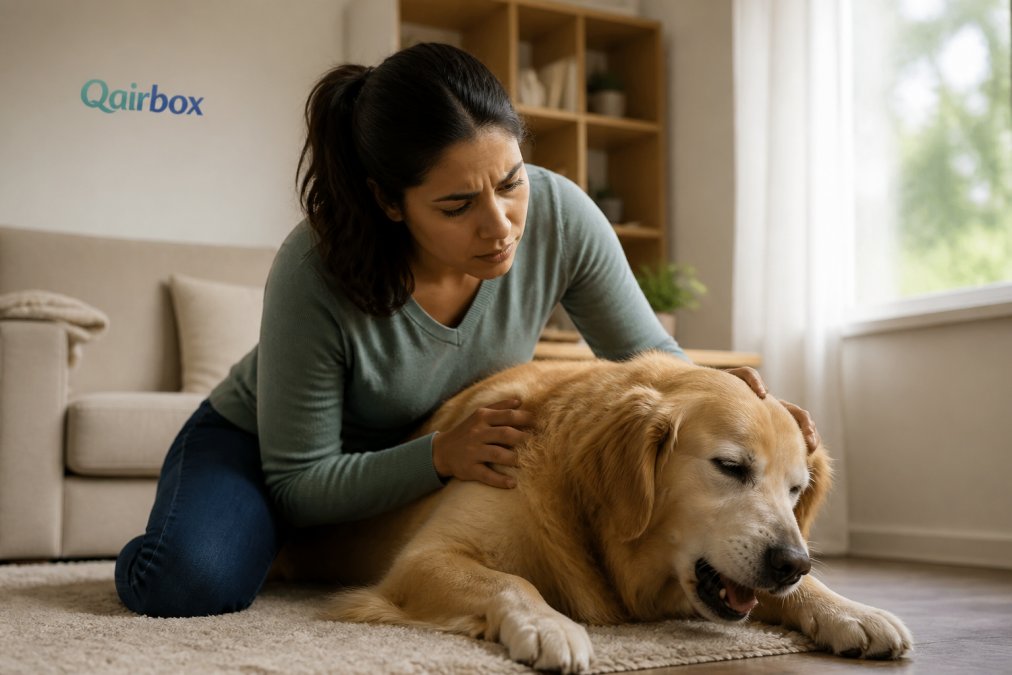
The damage isn't limited to the lungs. Ozone drives oxidative stress throughout the body and inflames mucous membranes in the eyes, nose, and throat. If you keep birds, reptiles, or small mammals, an ozone generator running anywhere in the home is a genuine hazard.
Not All Pets Breathe the Same Way
Most ozone warnings treat "pets" as one animal. Sensitivity varies enormously by species, and the advice changes depending on what lives in your house.
Birds are the most sensitive household animal, by a wide margin. Avian lungs push air through rigid air sacs in a one-way flow system that extracts oxygen, and any other gas present, with unusual efficiency. That's why canaries were carried into coal mines as early-warning detectors. A concentration a person barely registers can send a parrot or cockatiel into acute respiratory distress, so there is no safe treatment window for a bird in a room being ozoned. Remove the bird before the machine is switched on, not after.
Cats sit in the middle, and they hide it well. Feline airways are smaller than a dog's, and cats are stoic about respiratory discomfort, an exposed cat may show only a slightly increased resting respiratory rate, a quieter meow, or unusual hiding. Because cats groom constantly, they can ingest ozone-oxidized residue from their fur, a route dogs don't share. Short-nosed breeds like Persians and Himalayans have compressed nasal passages that worsen any airway irritant.
Dogs vary more by breed than by species. Brachycephalic (flat-faced) breeds, pugs, bulldogs, Boston terriers, boxers, already work harder to move air through narrowed airways, so an added irritant pushes them toward distress faster. Dogs with tracheal collapse, laryngeal paralysis, or chronic bronchitis are in the same elevated-risk group. A healthy medium-nosed dog in a large, well-ventilated room has more margin, but "more margin" is not "safe."
Small mammals and reptiles round out the risk list. Rabbits, guinea pigs, hamsters, and rats have high metabolic rates relative to body size, meaning high ventilation rates and rapid uptake of whatever is in the air. Reptile habitats, glass tanks with limited airflow, can concentrate ozone in ways an open room does not.
Symptoms of Ozone Exposure in Dogs and Cats
Symptoms of ozone exposure in pets typically appear as respiratory distress: coughing, wheezing, labored breathing, and a raspy or unusually quiet bark or meow. You may also see watery eyes, sneezing, throat irritation, lethargy, and reluctance to move around the house.
Watch for these signs, roughly in order of how often they show up:
- Persistent coughing, especially after time in a treated room
- Wheezing or audible breathing at rest
- Red, watery, or squinting eyes
- Sneezing fits and nasal discharge
- Drooling or lip-smacking from throat irritation
- Lethargy, hiding, or refusing food
- In severe cases, shortness of breath with the mouth open
Cats mask illness well, so a cat that seems "off" after an ozone treatment deserves a closer look. Short-nosed breeds, pugs, bulldogs, Persian cats, are more vulnerable because their airways are already compromised.
What to Do If Your Pet Is Exposed
Move the animal to fresh air immediately, that step takes priority over everything else. Turn off the device, open windows and doors, and carry your pet outside or to a well-ventilated area away from the treated space.
Then follow this sequence:
- Get to fresh air. Carry small pets; don't ask a struggling animal to walk.
- Keep them calm and still. Exertion increases oxygen demand when breathing is already compromised.
- Call your veterinarian or a pet poison control line. Describe the device, the room size, and how long the animal was exposed.
- Watch for worsening breathing. Rapid, shallow breathing or blue-tinged gums means emergency care now.
- Ventilate the home. Run fans, open windows, and keep pets out of the treated area until the ozone has fully dissipated.
Do not induce vomiting or give any medication unless a veterinarian tells you to. Ozone is inhaled, not ingested, so home remedies don't apply.
The Recovery Window: What Happens After the Vet Visit
Most guides stop at "call your vet," leaving owners without a plan for the days after. Ozone injury to the airway is not a one-time event, it's an inflammatory process that can peak 12 to 24 hours after exposure and resolve over days to weeks, depending on how much was inhaled and how healthy the animal was beforehand.
A realistic timeline: mild exposures usually resolve within 24 to 72 hours with rest and fresh air. Moderate exposures can leave coughing and exercise intolerance for a week or more. Severe cases, particularly birds or brachycephalic breeds, can take weeks to settle and may leave the animal more reactive to dust, smoke, and other irritants.
What actually helps during recovery:
- Rest, not walks. Skip the long walk or the dog park for several days. Exercise forces faster, deeper breathing through inflamed airways.
- Keep the air clean. Run a HEPA-filtered vacuum, avoid aerosol sprays, scented candles, and smoke, and keep windows closed on high-pollen or high-smoke days.
- Watch the resting respiratory rate. Count breaths while the animal is asleep. A rising resting rate over several days is a signal to call the vet again.
- Follow the vet's medication plan exactly. If a veterinarian prescribes a bronchodilator or an anti-inflammatory, finishing the course matters even after the cough quiets down.
- Do not re-expose. No ozone treatment, no "air sanitizing" fogger, no scented plug-in in the recovery space.
Why This Matters for the Whole Household
If one pet in the home is highly sensitive, a bird, a flat-faced dog, a cat with asthma, an ozone device anywhere in the house is a risk to that animal, not just to the room it sits in. Because ozone disperses through the entire structure, the only reliable protection is to not run the device at all. The alternative is to remove odors and irritants from the air continuously, everywhere the pet goes, without introducing a reactive gas.
Why Ozone Is Not Recommended for Indoor Use
No major public health or environmental agency endorses ozone generators for occupied indoor spaces. Ozone is a toxic exposure risk at the concentrations these devices produce, and there is no way to neutralize odors with it without also exposing the people and animals in the building.
Manufacturers sometimes claim ozone "reverts to oxygen" and leaves no residue. That's technically true over time but irrelevant to the risk, the harm happens during the exposure window, not after. Add chemical sensitivity, and you have a device that can trigger reactions long after the smell of ozone has faded.
How to Remove Pet Odors Safely
Safe pet odor removal relies on removal and neutralization rather than chemical reaction: eliminate the source, capture what's airborne, and keep the air moving. Odor control in a multi-animal home is a different problem than in a single-pet home, and tactics that work for one cat often fail once you add a second dog or a litter box in a shared space.
Start With the Source, Not the Air
Every odor problem has a source, and air treatment can only do so much while that source is active. Urine soaks through carpet into the padding and sometimes the subfloor; once there, no purifier eliminates the smell, it only reduces the airborne portion while the reservoir underneath keeps feeding new odor into the room. Locate and treat the source first.
- Use an enzymatic cleaner on organic stains. These products contain bacteria or enzymes that break down the uric acid crystals in urine, which is what actually holds the smell. Ordinary detergent leaves the crystals behind, and they reactivate on humid days.
- Saturate, don't spray. For carpet, the cleaner needs to reach the padding. A light surface spray will not.
- Replace what can't be saved. Severely contaminated padding or subfloor sections are usually cheaper to replace than to treat repeatedly.
- Wash bedding weekly in hot water. Pet beds, blankets, and crate pads hold dander and oils that re-release odor every time the animal lies down.
The Multi-Pet Problem
Two dogs and a cat generate odor continuously, and the challenge isn't just volume, it's distribution. Sources are scattered across the house: a couch in the den, a litter box in the laundry room, a crate in the bedroom. A single portable unit in one room cannot keep up with air that migrates through the whole house, and it does nothing for the rooms it isn't in.
A practical multi-pet routine looks like this:
- Assign each animal a defined zone. Litter boxes, feeding stations, and beds should have fixed locations so you can clean them on a schedule instead of chasing smells.
- Scoop litter daily and change it fully on a set cadence. A covered box traps odor but also concentrates ammonia, which is itself a respiratory irritant for cats and humans alike.
- Vacuum with a HEPA-filtered vacuum at least twice a week. Pet hair carries dander and oils; the hair itself is not the smell, but it's the vehicle.
- Use activated carbon where odors linger. Carbon adsorbs odor molecules rather than masking them. It works best in enclosed spaces, closets, crates, small rooms, where air changes slowly.
- Increase ventilation when you can. In hot, sealed-up months, that's often not an option, which is exactly when continuous air treatment matters most.
- Skip fragrance sprays and plug-ins entirely. They add volatile organic compounds to the air rather than removing anything, and they can irritate the same airways you're trying to protect. For a household with an asthmatic cat or a flat-faced dog, scented products are a step backward.
Why Room-by-Room Treatment Falls Short
Most multi-pet owners eventually notice this pattern: they buy a purifier for the worst-smelling room, the smell improves there, and then it seems to migrate elsewhere. It didn't migrate, it was always everywhere, and the unit just stopped masking it in one spot. Pet dander and odor compounds travel on air currents through hallways, up stairwells, and into bedrooms with the door open. In a multi-animal home, the air is one connected system, and treating it one room at a time is a losing game.
This is where whole-home air purification changes the math. A standalone, attic-mounted system runs continuously and treats the air throughout the house rather than in one room. Professionally installed and out of sight, it runs on its own without anyone remembering to switch it on, and it doesn't add another appliance to the floor of a room.
For homes in hot, tightly sealed climates, this matters more than elsewhere. When windows stay shut for months, airborne contaminants and odors have nowhere to go. A system that runs continuously and quietly in the background keeps the air moving through purification without introducing ozone, fragrance, or any other reactive chemistry into a house full of animals.
Whole-Home Air Purification System Benefits for Pet Owners
Whole-home air purification benefits households with pets because it addresses air everywhere at once, not just in the room where a unit sits. For allergy-sensitive families, that's the whole point: pet dander travels through a house on air currents, and a single-room device leaves the bedrooms, hallways, and the air your pet sleeps in untouched.
At Qairbox, we designed QBox around exactly this problem. It's a standalone system, professionally installed in the attic, out of sight and running quietly around the clock. It does not connect to or modify your existing HVAC or central A/C, so there's nothing to retrofit and no change to how your system operates. It delivers hospital-grade purification to the entire home, reducing odors, airborne particles, dust, and chemical irritants, with lower maintenance than multiple room purifiers.
Conclusion
The question of whether an ozone air purifier is safe for pets has a clear answer: it isn't, and the risk is highest for the animals least able to avoid it. Birds, cats, flat-faced dogs, and small pets in enclosed spaces face the greatest danger, with symptoms ranging from coughing and eye irritation to serious lung inflammation.
Frequently Asked Questions
Can you run an ozone machine with pets in the house?
No. Ozone generators should never run while pets are present. Even low levels can irritate a pet's lungs and mucous membranes, causing coughing and wheezing. If you must use one, remove all pets, ventilate thoroughly afterward, and wait until ozone levels return to safe background levels before letting them back inside. Safer alternatives like HEPA filtration and activated carbon are better choices for homes with animals.
How long after using an ozone machine is it safe for pets to return?
There is no single safe time frame. It depends on the room size, ozone output, and ventilation. A conservative rule is to air out the space with open windows and fans for at least two hours after the machine is off, then confirm no lingering ozone odor. Some veterinary toxicologists recommend waiting 24 hours. Because pets have smaller lungs and faster metabolisms, err on the side of caution and consult your veterinarian if unsure.
What are the respiratory risks of ozone exposure for dogs and cats?
Ozone damages the lining of the airways, leading to lung inflammation, oxidative stress, and fluid accumulation (pulmonary edema) in severe cases. Dogs and cats may show coughing, wheezing, shortness of breath, and throat irritation. Birds and small pets are even more sensitive. Repeated exposure can cause chronic respiratory distress. If you notice these signs after ozone use, move your pet to fresh air and call your vet immediately.
Are there safer alternatives to ozone generators for pet odor removal?
Yes. Enzyme-based cleaners break down urine and odor molecules at the source. For airborne odors, a whole-home air purification system with HEPA filtration and activated carbon traps pet dander, volatile organic compounds, and lingering smells without producing ozone. A professionally installed attic system runs quietly 24/7 and cleans the air throughout your entire home, making it a low-maintenance, pet-safe option.
If you're dealing with persistent pet odors or allergy symptoms in a sealed-up home, the fix isn't a stronger chemical treatment. It's continuous purification that reaches every room. Qairbox installs a standalone, attic-mounted whole-home air purification system that runs 24/7, stays out of sight, and doesn't touch your existing HVAC. Schedule a consultation with Qairbox and get cleaner air throughout your home, without the risks that come with ozone.