Professional Whole Home Air Purification Installation: A 2026 Guide
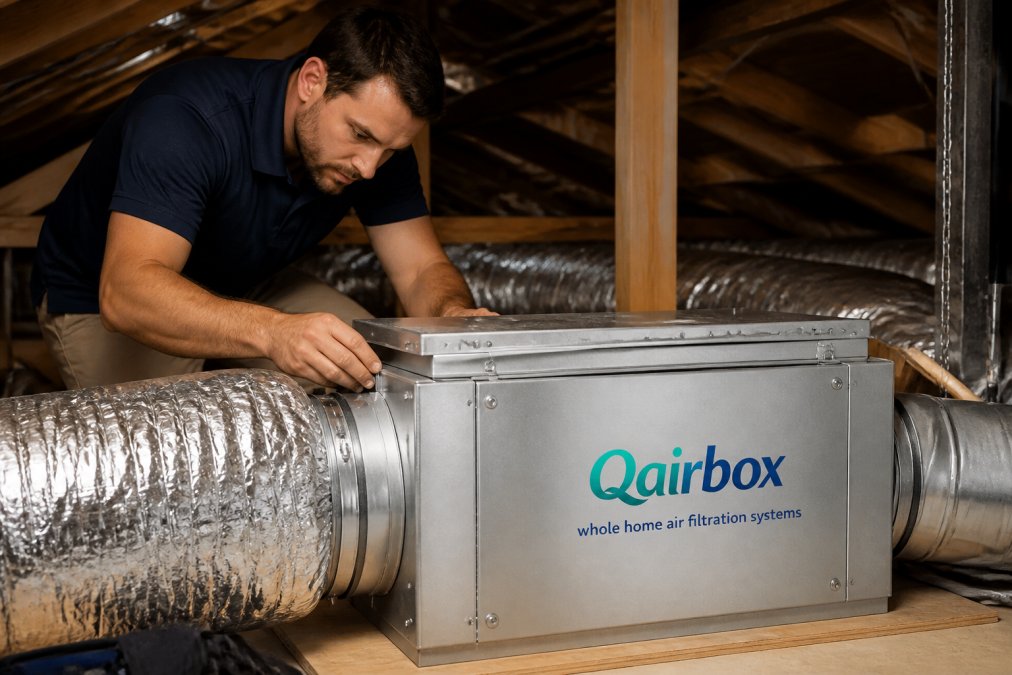
Table of Contents
- How Professional Whole Home Air Purification Installation Works
- Best Whole Home Air Purification Systems: Types and Technologies
- MERV Rating Explained: Understanding Filter Efficiency
- Whole House Air Purifier Cost: What to Expect
- Air Purifier Maintenance Tips: Filter Replacement and System Care
- Signs You Need Professional Whole Home Air Purification
- Smart Home Integration and Monitoring
- Conclusion
Last Updated: August 8, 2026
How Professional Whole Home Air Purification Installation Works
Professional whole home air purification integrates hospital-grade filtration directly into your existing HVAC infrastructure, delivering cleaned air to every room simultaneously. Unlike portable units, this approach provides comprehensive indoor air quality management throughout your entire residence with minimal maintenance and no visible equipment cluttering your living areas.
The installation process begins with a detailed assessment of your home's HVAC system, ductwork configuration, and air quality needs. A qualified technician evaluates whether your current system can support the additional airflow demands of a whole-home purifier without compromising efficiency or creating pressure imbalances that reduce performance.
System Assessment and HVAC Compatibility
Your existing HVAC system must be evaluated for compatibility before installation proceeds. The technician checks whether your furnace blower motor has sufficient capacity to handle the additional static pressure created by the filtration system. A system undersized for your home's square footage may struggle to distribute filtered air effectively, while an oversized system wastes energy.
Qairbox's professional installation team assesses your ductwork layout, identifies sealing issues that could bypass the filter, and determines optimal placement for maximum air exchange rate. The assessment also considers your home's construction type, desert homes, typically sealed tightly for cooling efficiency, may already have restricted airflow and require careful balancing to avoid negative pressure.
Static Pressure and Ductwork Evaluation
Static pressure is the resistance to airflow created by your ductwork, filters, and HVAC components. When you add a whole-home air purifier, it increases this resistance. If your system can't overcome that resistance, filtered air moves slowly through your home, reducing the air exchange rate and leaving some areas with stale air.
The technician evaluates your ductwork for leaks, undersized sections, and sharp bends that restrict airflow. Ductwork modifications may be necessary to reduce static pressure and ensure efficient operation. This might include sealing leaks with mastic sealant, replacing undersized ducts, or repositioning supply registers to improve air distribution.
Installation Process and Placement
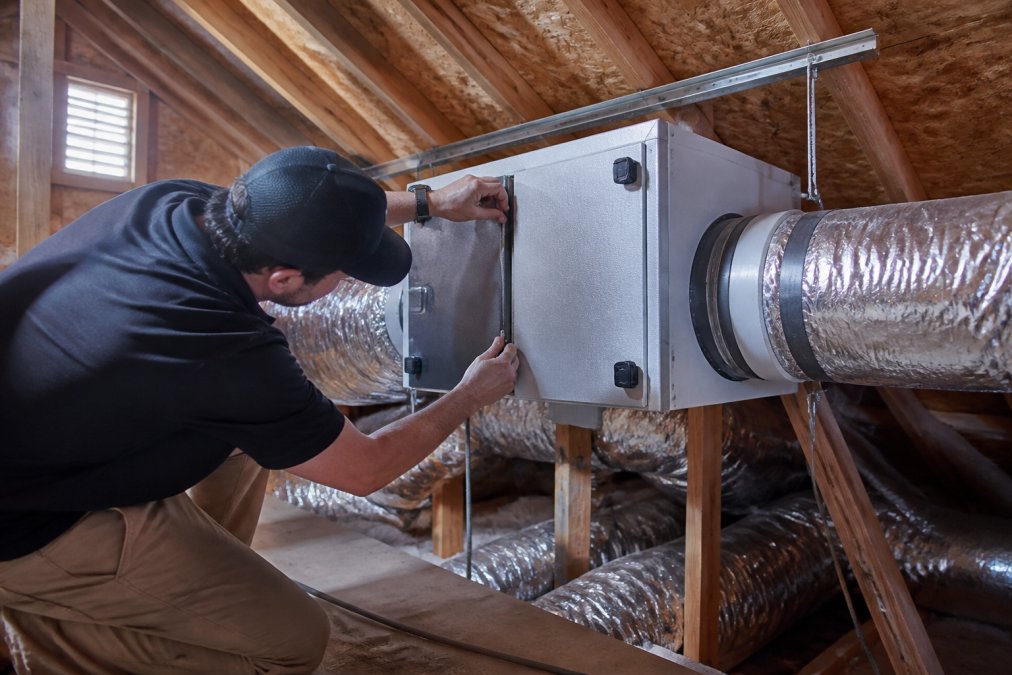
Most whole-home air purifiers integrate into your return air ductwork, positioned between your home and the furnace. This placement allows the system to filter all air before it's conditioned and distributed. Qairbox systems mount in the attic for a completely out-of-sight installation that doesn't require visible equipment in your living spaces.
The installation involves connecting the purifier to your return air duct with airtight connections to prevent unfiltered air from bypassing the system. The technician installs access panels for filter replacement and runs necessary electrical connections. Professional installation typically takes 4-8 hours depending on your home's layout and existing ductwork configuration. After installation, the technician tests airflow, verifies proper operation, ensures the blower motor isn't straining, and provides training on filter replacement schedules and system monitoring.
Best Whole Home Air Purification Systems: Types and Technologies
Different purification technologies target different contaminants. Most effective whole-home systems combine multiple technologies to address particulate matter, volatile organic compounds, odors, and airborne pathogens simultaneously.
HEPA Filtration and Particulate Matter Removal
HEPA (High-Efficiency Particulate Air) filtration captures 99.97% of particles 0.3 microns and larger, including dust, pollen, pet dander, and some bacteria. This technology forms the foundation of most whole-home air purification systems because particulate matter is the most common indoor air quality problem, especially in desert environments where dust infiltration is constant.
HEPA filters work through mechanical trapping, air passes through a dense mat of fibers that catch particles through interception, impaction, and diffusion. The filter doesn't use electricity or generate byproducts; it simply removes particles from the air stream. HEPA filters typically require replacement every 12-18 months depending on your home's dust load. A MERV 13 or higher filter provides HEPA-equivalent performance when integrated into your HVAC system.
Activated Carbon and Volatile Organic Compounds
Volatile organic compounds (VOCs) are gases released from household products, paints, cleaning supplies, and furnishings. They don't get trapped by HEPA filters because they're molecular-sized, not particulate. Activated carbon removes VOCs through adsorption, where gas molecules stick to the carbon's porous surface.
Activated carbon also eliminates odors from cooking, pets, and general household use. This is particularly valuable in tightly sealed desert homes where odors can concentrate quickly without natural ventilation. Carbon filters saturate over time and lose effectiveness; replacement intervals depend on your home's VOC load.
UV Germicidal Irradiation Technology
Ultraviolet germicidal irradiation (UVGI) uses UV light to inactivate airborne pathogens, including bacteria and viruses. As air passes through the UV chamber, microorganisms' DNA is damaged, preventing reproduction. This technology is particularly valuable for health-conscious households, especially those with young children, elderly members, or immunocompromised individuals.
Professional installations position UV lamps in the return air ductwork where they treat all air circulating through your home. UV lamps require periodic cleaning to maintain effectiveness, as dust accumulation reduces light transmission. Most systems include access points for maintenance, though professional cleaning is recommended annually.
MERV Rating Explained: Understanding Filter Efficiency
MERV stands for Minimum Efficiency Reporting Value, a standardized scale measuring how effectively a filter removes particles from air. Understanding MERV ratings helps you select the right filter for your whole-home system and balance filtration performance against airflow restrictions.
MERV Scale and Performance Standards
The MERV scale ranges from 1 to 16, with higher numbers indicating finer filtration. MERV 1-4 filters capture large particles like dust and lint but allow smaller allergens through. MERV 13-16 filters provide HEPA-equivalent performance, trapping 99% of particles 0.3 microns and larger.
Each step up in MERV rating increases the filter's density, which creates higher static pressure and requires a more powerful blower motor to maintain airflow. Professional whole-home systems are engineered to handle higher MERV ratings without airflow problems. Qairbox systems integrate with your HVAC to support efficient filtration at higher MERV levels, ensuring you get maximum air cleaning without compromising performance or energy consumption.
Choosing the Right MERV Rating for Your Home
For most homes, MERV 13 represents the optimal balance between filtration performance and system compatibility. It captures allergens, dust, and most airborne contaminants without creating excessive static pressure. Homes with severe allergies, asthma, or immunocompromised residents may benefit from MERV 15-16, though this requires professional evaluation of your HVAC system's capacity.
Desert homes often benefit from MERV 13 or higher because dust infiltration is constant. Higher MERV filters saturate faster because they trap smaller particles. A MERV 16 filter might require replacement every 4-6 months in a dusty environment, while a MERV 13 might last 8-12 months. Factor replacement costs and frequency into your system choice.
Whole House Air Purifier Cost: What to Expect
Professional whole-home air purification involves two cost components: equipment and installation labor. Understanding these costs helps you evaluate the investment and plan your budget appropriately.
Equipment and Installation Labor Breakdown
Whole-home air purification systems vary widely in cost depending on filtration technology, system capacity, and brand. For specific pricing on Qairbox systems and professional installation, contact the team directly for a customized quote. Pricing depends on your home's square footage, existing HVAC configuration, and the specific technologies you need. Qairbox provides transparent pricing after the initial assessment, with no hidden costs or surprise charges.
Long-Term ROI and Energy Consumption
A professional whole-home system operates continuously at optimal efficiency because it's integrated with your HVAC. Your furnace blower runs on a schedule based on heating and cooling needs, not on a separate timer for air purification. This coordinated operation uses less total energy than running multiple portable units independently.
Filter replacement costs typically range from $150-400 per replacement depending on the filter type and system, with most homeowners budgeting for 1-2 replacements annually. Energy savings accumulate over time, a properly sealed home with an efficient whole-home purifier uses less energy for heating and cooling because air doesn't infiltrate through gaps and cracks. Over 10 years, these efficiency gains can offset a significant portion of your initial investment, particularly in desert climates where cooling costs are substantial.
Air Purifier Maintenance Tips: Filter Replacement and System Care
Regular maintenance ensures your whole-home air purification system continues delivering peak performance. Understanding maintenance requirements before purchasing helps you commit to the care schedule your system needs.
Filter Replacement Cycles and Preventative Maintenance
Filter replacement frequency depends on your home's dust load, the MERV rating of your filters, and how many hours per day your HVAC system operates. Most professional systems require filter replacement every 12-18 months for HEPA filters and every 6-12 months for activated carbon filters. Desert homes with high dust infiltration may need more frequent replacements.

Many modern systems include electronic monitoring that alerts you when filters need replacement. Some Qairbox systems provide real-time notifications when filter performance drops, eliminating guesswork about maintenance timing. Replacement is straightforward, access panels allow you to remove and install new filters without tools or specialized knowledge.
System Diagnostics and Performance Monitoring
Professional whole-home systems should include diagnostic capabilities that let you verify the system is actually working. Some systems provide visual indicators showing airflow and filter status. Others integrate with smart home ecosystems, sending performance data to your phone so you can monitor air quality metrics in real time.
Request system diagnostics during your professional installation. The technician should demonstrate how to access performance information and explain what normal operation looks like. Annual professional inspections catch issues before they affect performance, verifying airflow rates, checking for ductwork leaks that develop over time, and ensuring all components operate within specifications.
Signs You Need Professional Whole Home Air Purification
Not every home needs a whole-home air purification system, but certain conditions indicate one would deliver significant benefits.
Allergen Reduction and Health-Specific Customization
If anyone in your household experiences allergies, asthma, or other respiratory conditions triggered by indoor air quality, professional whole-home air purification addresses the root cause rather than treating symptoms. Continuous HEPA filtration removes the allergens circulating through your home, reducing exposure 24/7.
Children and elderly household members benefit significantly from cleaner air. Young children's immune systems are still developing, making them more vulnerable to airborne pathogens and allergens. Pet owners dealing with dander, odors, and hair should consider whole-home purification.
Desert Climate Considerations and Tight Home Sealing
Desert homes are typically sealed tightly to maintain cooling efficiency, which reduces natural ventilation. This means indoor air quality depends entirely on your HVAC system's ability to filter and recirculate air. Dust infiltration during door openings and HVAC operation concentrates quickly in sealed homes.
If you notice dust accumulating on surfaces despite regular cleaning, or if you're constantly replacing furnace filters, a whole-home system addresses the underlying problem. High pollen seasons in desert regions can make outdoor air unsuitable for natural ventilation. Whole-home air purification with professional installation ensures clean air circulates regardless of outdoor conditions.
Smart Home Integration and Monitoring
Modern whole-home air purification systems increasingly integrate with smart home ecosystems, allowing remote monitoring and control. Smart integration allows you to monitor air quality metrics from your phone, receive filter replacement alerts, and adjust purifier settings remotely. Some systems track indoor air quality trends over time, helping you identify seasonal patterns or specific events that degrade air quality.
Voice control integration with popular smart home assistants lets you check system status or adjust settings without accessing an app. Professional installation should include smart integration setup, with the technician configuring your system to connect to your home network and verifying that monitoring features work correctly.
Professional whole-home air purification installation represents a significant investment in your home's indoor air quality and your family's health. Qairbox delivers hospital-grade air purification integrated seamlessly into your existing HVAC system, installed discreetly in your attic for quiet, continuous operation. Our professional installation ensures your system operates at peak efficiency, effectively reducing odors, airborne particles, and chemical irritants throughout your entire home. For desert homeowners, allergy-sensitive families, and anyone committed to superior indoor air quality, professional whole-home air purification from Qairbox provides the comprehensive, low-maintenance solution that room-level purifiers simply cannot match. Schedule a consultation to assess your home's air quality needs and discover how professional installation can transform your indoor environment.
Frequently Asked Questions
How much does professional whole home air purification installation cost?
The cost of professional whole home air purification installation depends on your system type, home size, HVAC compatibility, and installation complexity. Equipment and professional installation labor are separate considerations. For current pricing and a customized quote based on your specific needs and home configuration, contact Qairbox directly to discuss your requirements and receive an accurate estimate.
Will a whole home air purification system work with my existing HVAC system?
Most modern HVAC systems can integrate with whole home air purification systems without requiring complete replacement. A professional assessment evaluates your ductwork, blower motor capacity, and static pressure to ensure compatibility. Hospital-grade systems like those from Qairbox are designed to integrate seamlessly with existing central air systems, though ductwork modifications may occasionally be needed for optimal airflow and system performance.
How often do you need to change filters in a whole home air purifier?
Filter replacement cycles depend on your MERV rating, home environment, and usage patterns. Higher MERV-rated filters typically require replacement every 3-6 months, while lower MERV filters may last 6-12 months. Homes with pets, cooking activity, or high dust levels need more frequent replacements. Professional maintenance schedules help optimize filter replacement cycles and ensure your system maintains peak air purification efficiency and clean air delivery rates.
Does a whole home air purifier actually remove allergens and odors?
Yes, professional whole home air purification systems with HEPA filtration remove 99.97% of airborne particles, including allergens, dust, and pollen. Activated carbon filters eliminate volatile organic compounds and odors. For severe allergies, hospital-grade systems provide comprehensive allergen reduction throughout your entire home. Results depend on proper installation, correct MERV rating selection, and regular filter maintenance to sustain air purification effectiveness and indoor air quality.
Do I need professional installation for a whole home air purifier?
Professional installation is strongly recommended for whole home air purification systems. Proper installation requires assessing static pressure, evaluating ductwork, ensuring HVAC integration, and optimizing airflow. Professional technicians diagnose system compatibility, identify ductwork modifications if needed, and ensure optimal placement for maximum coverage. DIY installation risks poor performance, reduced air exchange rates, and potential HVAC system damage. Professional installation guarantees your system operates efficiently and delivers the indoor air quality results you expect.
Will adding a whole home air purifier increase my energy bills?
A properly installed whole home air purification system has minimal impact on energy consumption when integrated correctly with your existing HVAC system. The blower motor works within your current system's capacity. In fact, reduced airflow restriction from preventative maintenance and appropriate MERV ratings can improve overall HVAC efficiency. Long-term ROI includes improved indoor air quality and potential health benefits, offsetting any minor energy increases, especially in tightly sealed desert homes.
What maintenance does a whole home air purification system require?
Whole home air purification systems require regular filter replacement based on your MERV rating and home environment (typically every 3-6 months), periodic system diagnostics to check airflow and performance, and occasional ductwork inspection. Professional preventative maintenance ensures optimal air exchange rates, identifies potential issues early, and extends system lifespan. Most systems are low-maintenance compared to portable units, with professional installation supporting long-term reliability and consistent air purification performance.
How do I know if my home needs professional whole home air purification?
Consider professional whole home air purification if you experience severe allergies, live in a desert climate with high dust levels, have pets or cook frequently, notice persistent odors despite cleaning, or have young children or elderly family members. Homes with tight sealing (common in desert regions) trap airborne pollutants, making whole home systems ideal. If portable units haven't resolved indoor air quality issues or you prefer a discreet, low-maintenance solution, professional installation provides comprehensive coverage and health-specific customization.