Reduce Household Allergens: A Complete Guide
Table of Contents
- Understanding Common Household Allergens
- How HVAC Filters Trap Airborne Allergens
- MERV Ratings and Filter Types Explained
- How to Improve Indoor Air Quality for Allergy Sufferers
- Whole-Home Air Purification Benefits Beyond Filters
- Humidity Control and Allergen Reduction
- Creating an Allergen-Reduction Strategy for Your Home
- Frequently Asked Questions
Last Updated: October 1, 2026
Understanding Common Household Allergens
To reduce household allergens, you need to understand the tiny particles floating through your home that trigger allergic reactions and respiratory problems. Dust mites, pet dander, pollen, mold spores, and fungal particles are the most common culprits. They settle on surfaces, get kicked up into the air, and circulate through your living spaces all day long.
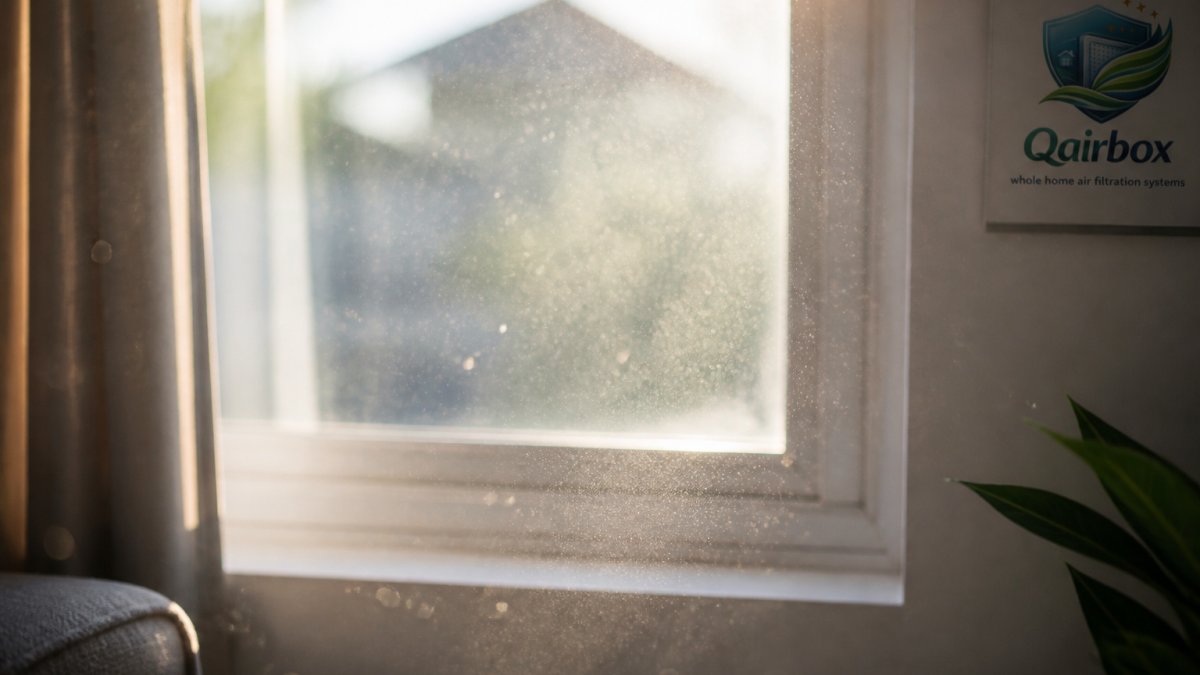
If you have a family member with allergies or asthma, you already know how these particles affect daily life. Sneezing, itchy eyes, congestion, and difficulty breathing can make your home feel uncomfortable. The problem gets worse in hot, desert climates where tightly sealed homes trap these contaminants indoors.
Common household allergens include:
- Dust mites, microscopic creatures living in bedding, furniture, and carpets
- Pet dander, skin cells shed by dogs, cats, and other animals
- Pollen, seasonal particles that enter through windows and doors
- Mold spores, fungal particles that thrive in humid areas
- Particulate matter, dust, dirt, and debris from outdoor air
The challenge is that these particles are invisible to the naked eye. You can't see them circulating through your home, which is why many families don't realize how much allergen exposure they're dealing with. A whole-home approach to reducing these contaminants makes a real difference.
How HVAC Filters Trap Airborne Allergens
HVAC filters work by forcing air through a dense filtration media that catches particles as they pass through. The air flows into your heating and cooling system, gets filtered, and circulates back into your home cleaner than before. This continuous cycle helps reduce allergen levels throughout your entire living space.
The filtration media is typically made of fiberglass, pleated paper, or synthetic materials with microscopic fibers. As air passes through, airborne particles get trapped in these fibers. Dust, pollen, pet dander, and other contaminants stick to the filter instead of circulating back into your rooms.
Here's how the process works:
- Air enters the HVAC system from your home
- Particles hit the filtration media and get trapped
- Clean air exits and returns to your living spaces
- The filter accumulates trapped particles over time
- Filter efficiency decreases as it fills up
One important consideration: standard fiberglass filters catch larger particles but let smaller ones pass through. This is where filter type matters significantly for allergy sufferers. Higher-efficiency filters trap more microscopic irritants that trigger respiratory symptoms.
The effectiveness of this approach depends on your filter choice and how often you replace it. A filter that's too clogged won't trap new particles effectively. A filter that's too thin won't catch enough contaminants in the first place.
MERV Ratings and Filter Types Explained
When homeowners search for allergen solutions, they often encounter MERV ratings. Understanding why standard filters fall short is the first step toward recognizing the limitations of HVAC-based filtration alone.
MERV stands for Minimum Efficiency Reporting Value, a rating system that measures how well a filter traps particles. The scale runs from 1 to 20, with higher numbers indicating better particle capture. However, higher MERV ratings come with a critical trade-off that most articles ignore: increased static pressure on your HVAC system.
Here's the problem most homeowners don't realize:
- Standard fiberglass filters (MERV 1-4) trap only large dust particles. Microscopic allergens like dust mite feces, pet dander fragments, and mold spores pass straight through into your living spaces.
- Mid-range pleated filters (MERV 9-12) catch more particles but still miss the smallest irritants that trigger severe allergies and asthma.
- High-efficiency filters (MERV 13+) theoretically capture more contaminants, but they create significant static pressure that can strain older HVAC systems, reduce airflow, increase energy consumption, and potentially damage the blower motor over time.
This is the hidden risk: upgrading to a very high MERV filter in an older or undersized HVAC system can actually harm your equipment. Your system was designed to work with filters in a specific MERV range. Pushing beyond that range forces the motor to work harder, shortens equipment lifespan, and may void warranties.
Even when a system can handle higher MERV filters, the improvement in allergen reduction plateaus. A MERV 13 filter doesn't capture twice as many allergens as a MERV 11, the gains diminish, while the strain on your system increases.
The fundamental limitation: HVAC filters only clean air when your heating or cooling system is running. In mild seasons when you're not using your furnace or air conditioner, no filtration happens at all. Your home's air sits stagnant, and allergens accumulate. This is especially problematic in desert climates where homes are tightly sealed and air circulation depends entirely on mechanical systems.
For families with severe allergies, this means standard filter upgrades, no matter how high the MERV rating, cannot deliver the continuous, independent purification needed to significantly reduce household allergens. A whole-home air purification system that runs 24/7 independently of your HVAC addresses this gap by providing constant filtration whether your heating or cooling is active or not.
How to Improve Indoor Air Quality for Allergy Sufferers
Reducing household allergens requires understanding both what works and what doesn't. Many homeowners invest in filter upgrades, humidity control, and cleaning routines, only to find allergies persist. The reason: these tactics address symptoms, not the root problem of continuous allergen circulation.
The multi-layer approach has real limits:
Humidity control (keeping levels between 30-50%) does slow dust mite reproduction and mold growth. Weekly hot-water bedding washes do remove allergen buildup. HEPA-filter vacuums do prevent particles from being re-released during cleaning. But none of these steps run continuously. Dust mites still live in your mattress, pollen still enters through cracks, and mold spores still settle in corners. Between cleaning sessions, allergens accumulate.
Moreover, standard HVAC filters only operate when your system runs. In mild seasons, spring and fall in many climates, your furnace and air conditioner may sit idle for weeks. During those periods, no filtration happens. Allergens stagnate indoors, especially in tightly sealed desert homes designed to keep out heat.
A critical safety consideration: filter disposal.
When you remove a clogged filter, you're holding a material saturated with dust mites, pet dander, mold spores, and other allergens. Tossing it into a trash can or shaking it out to "clean" it releases all those particles back into your home, undoing the filtration work the filter did. Safe disposal requires:
- Seal the filter in a plastic bag before removing it from the filter housing to contain loose particles.
- Do not shake or tap the filter to dislodge dust; this aerosolizes allergens.
- Dispose of the sealed bag immediately in an outdoor trash bin if possible.
- Wash your hands thoroughly after handling the filter.
- Avoid opening the bag indoors to inspect the filter; the particles will spread.
Most homeowners never learn this, so they inadvertently re-contaminate their homes every time they change a filter.
The upgrade trap:
Some families respond by upgrading to higher MERV filters, thinking "better filter = better protection." But as noted above, MERV 13+ filters increase static pressure and can damage HVAC systems designed for lower MERV ratings. You're trading one problem (allergen exposure) for another (equipment failure).
What actually works for severe allergies:
Combining humidity control, regular cleaning, and safe filter disposal does help, but only if you also have continuous, independent air purification running 24/7. A whole-home air purification system installed in your attic operates independently of your HVAC, meaning it purifies your air whether your furnace is running or not.
Whole-Home Air Purification Benefits Beyond Filters
Standard HVAC filters address part of the allergen problem, but they have limitations. A whole-home air purification system takes allergen reduction to the next level. At Qairbox, we've designed a standalone system that works independently of your existing HVAC setup to deliver hospital-grade purification throughout your entire home.
Unlike filter upgrades alone, a whole-home air purification system:
- Runs 24/7 independently, doesn't rely on your heating or cooling system to operate
- Handles higher particle loads, catches more contaminants than standard filters
- Reduces odors and chemical irritants, goes beyond basic dust and pollen trapping
- Requires minimal maintenance, no constant filter replacements like room purifiers
- Works in tightly sealed homes, ideal for desert climates where homes are sealed against heat
Humidity Control and Allergen Reduction
Humidity levels directly affect allergen concentration in your home. Dust mites thrive in moist environments and multiply rapidly above 50% humidity. Mold spores also flourish in damp conditions. Controlling humidity is just as important as filtering particles.
Strategies for humidity management:
- Use air conditioning to remove moisture
- Run exhaust fans during and after showers
- Avoid using humidifiers unless humidity drops below 30%
- Ensure proper ventilation in kitchens and bathrooms
- Fix any water leaks or damp spots immediately
Creating an Allergen-Reduction Strategy for Your Home
Building an effective allergen-reduction plan means addressing multiple sources simultaneously. No single solution eliminates all household allergens. A comprehensive approach combines filtration, humidity control, cleaning habits, and whole-home purification.
Start with these steps:
- Assess your current filter, Check the MERV rating and replacement schedule
- Upgrade to a better filter, Move from fiberglass to pleated or higher-efficiency options
- Measure your humidity, Get a hygrometer and track levels
- Establish a replacement schedule, Mark your calendar for monthly filter checks
- Clean strategically, Focus on bedrooms and high-allergen areas first
- Evaluate whole-home options, Consider a standalone air purification system for comprehensive protection
Frequently Asked Questions
What MERV rating should I use to reduce household allergens?
For severe allergies, a standalone whole-home system offers superior allergen trapping without stressing your existing HVAC.
How often should I replace HVAC filters to reduce allergens?
Replace standard filters every 1-3 months, depending on household dust levels and pet presence. High-traffic homes or those with pets may need monthly replacement. Check your filter monthly by holding it to light; if you cannot see through it, replace it immediately. A clogged filter restricts airflow and reduces filtration efficiency, allowing more allergens to bypass the filter media and circulate through your home.
Can HVAC filters alone eliminate severe household allergies?
HVAC filters reduce airborne allergens significantly, but they have limitations. Standard filters miss microscopic irritants and bypass air can carry contaminants around the filter. For severe allergies, HVAC filtration works best alongside humidity control (keeping levels 30-50%), regular dusting, and pet grooming. A standalone whole-home air purification system provides hospital-grade filtration throughout your entire home without modifying your existing HVAC, offering comprehensive allergen reduction where filters alone fall short.
Will upgrading to a high-MERV filter improve my home's air quality?
If your HVAC cannot handle higher MERV ratings, a standalone whole-home purification system offers superior filtration without stressing your existing equipment or raising utility costs.