Whole Home Air Purification for Severe Allergies
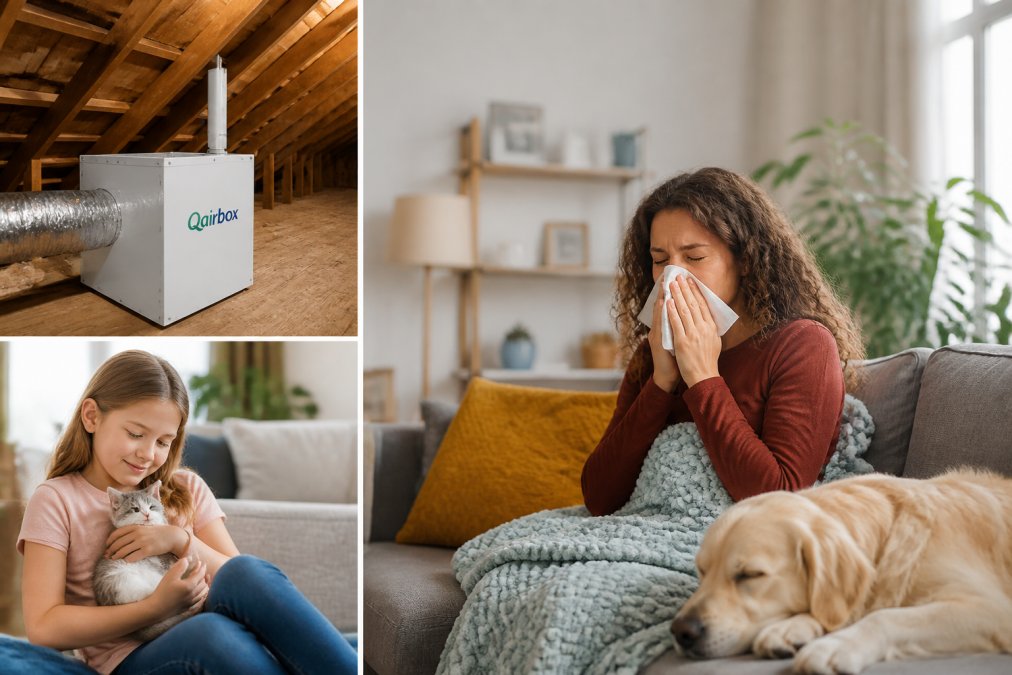
Table of Contents
- Why Whole Home Air Purification Matters for Severe Allergies
- How HEPA Filtration and Micron Ratings Protect Against Allergens
- Indoor Air Quality for Allergy Sufferers: What Makes a Real Difference
- Attic-Mounted Air Purification System: The Standalone Advantage
- Key Features That Work for Severe Allergies
- Whole Home vs. Portable Units: Why Coverage Matters
- Maintenance and Long-Term Performance
- Conclusion
Last Updated: August 11, 2026
Why Whole Home Air Purification Matters for Severe Allergies
Severe allergies affect millions of homeowners, and the frustration runs deep. You've tried air filters, portable units, and cleaning routines. Yet allergens still circulate through your home, triggering symptoms that disrupt sleep, work, and quality of life. The real problem isn't effort, it's that most solutions only clean the air in one room while allergens settle throughout the rest of your house.
Whole home air purification for severe allergies addresses this fundamental gap. Unlike portable units that treat isolated spaces, a whole-home system works continuously to filter every cubic foot of air your family breathes. For households with allergy sufferers, young children, or older adults sensitive to airborne particles, this comprehensive approach delivers measurable relief.
At Qairbox, we've worked with families across desert climates and tightly sealed homes who discovered that fragmented air cleaning wasn't enough. They needed a solution that worked everywhere simultaneously, not just in the bedroom or living room. A properly designed whole-home system captures pollen, dust mites, pet dander, and mold spores before they settle on surfaces or get inhaled.
The stakes are real. Indoor air quality directly impacts respiratory health, sleep quality, and daily comfort. When allergens persist despite your efforts, it's often because the air purification strategy doesn't match the scale of the problem.
How HEPA Filtration and Micron Ratings Protect Against Allergens
HEPA filtration is the gold standard for allergen removal, and understanding how it works helps explain why whole-home systems deliver superior results. HEPA stands for High-Efficiency Particulate Air, and a true HEPA filter captures 99.97% of particles as small as 0.3 microns. That threshold matters because it targets the exact size range where most allergens live.
Pollen typically ranges from 10 to 100 microns, making it relatively easy to capture. Dust mites and their droppings fall between 10 and 40 microns. Mold spores range from 3 to 40 microns depending on the species. Pet dander varies from 5 to 100 microns. The critical protection comes from particles smaller than 1 micron, ultrafine particles that bypass standard filters and lodge deep in the lungs. HEPA filtration catches these too.
Micron ratings determine what a filter actually removes. A 5-micron filter stops larger particles but lets smaller allergens pass. A 1-micron filter captures more, but HEPA's 0.3-micron rating is where true allergen protection begins. This is why portable room purifiers with lower-grade filters often disappoint allergy sufferers, they're not capturing the full spectrum of problematic particles.
Activated carbon filters complement HEPA by removing volatile organic compounds, odors, and chemical irritants that standard mechanical filtration misses. For families dealing with cooking odors, pet smells, or off-gassing from new furniture, this dual-layer approach prevents the stale, recirculated air feeling that makes allergy symptoms worse.
The effectiveness of whole-home air purification for severe allergies depends on both filter quality and system design. A high-grade HEPA filter installed in a standalone system that runs 24/7 delivers consistent, comprehensive protection. Room purifiers, by contrast, only clean the air within their immediate radius, typically 300 to 500 square feet, leaving hallways, bedrooms, and other spaces unprotected.
Indoor Air Quality for Allergy Sufferers: What Makes a Real Difference
Indoor air quality measures go beyond just filtering visible dust. The metric that matters most is air changes per hour (ACH), which indicates how many times the system completely exchanges the air in your home. For allergy sufferers, higher ACH values mean faster removal of newly introduced allergens.
Most portable room purifiers deliver 2 to 4 air changes per hour in a single room. Whole-home systems designed for comprehensive coverage typically achieve 4 to 6 ACH throughout the entire house, depending on system design and home size. This difference translates directly to symptom relief, faster allergen removal means fewer particles in the air you're breathing.
Air quality sensors have become standard in modern systems, providing real-time feedback on particulate levels. When sensors detect a spike in airborne particles, perhaps from opening a window or a family member coming in from outside, the system can automatically increase filtration intensity. This responsive approach prevents the lag time where allergens accumulate before you realize the air quality has dropped.
Sealed ductwork and proper system installation are equally important. Leaky ducts or poorly designed airflow patterns allow unfiltered air to bypass the purification stage entirely. A professionally installed whole-home system ensures that all air circulates through the filter rather than finding shortcuts around it.
The psychological benefit matters too. Families with severe allergies often live in a state of hypervigilance, constantly worried about whether the air they're breathing is safe. A comprehensive system that runs invisibly, continuously, and reliably removes that burden. The air quality improves, symptoms decrease, and the household can finally relax.
Attic-Mounted Air Purification System: The Standalone Advantage
The placement of an air purification system determines both its effectiveness and its impact on daily life. An attic-mounted, standalone whole-home air purification system operates out of sight and out of mind, running quietly 24/7 without disrupting your home's aesthetics or taking up valuable living space.

Unlike portable units that consume floor space in bedrooms and living areas, or HVAC modifications that require retrofitting your existing heating and cooling system, a standalone attic-mounted approach delivers whole-home air purification for severe allergies without compromise. The system operates independently, it doesn't connect to, modify, or depend on your existing HVAC or central air conditioning. This independence is critical for homeowners who already have a functioning HVAC system and don't want the complexity and expense of integration.
Attic installation offers practical advantages for desert homes and tightly sealed residences. The attic space remains stable in temperature, reducing the energy burden on the purification system. Noise from the system's operation stays isolated from living spaces, so family members sleep undisturbed while the system runs continuously overnight, precisely when allergen control matters most.
Professional installation ensures proper ductwork connections, filter access, and maintenance pathways. A qualified technician designs the system to achieve even air distribution throughout your home, preventing dead zones where allergens accumulate. This level of precision is difficult to achieve with portable units scattered across multiple rooms.
The standalone design also means no dependency on your home's electrical or structural systems. If your HVAC fails, your whole-home purification continues. If you upgrade your heating system in the future, your air purification remains unaffected. This independence provides long-term stability and flexibility.
Key Features That Work for Severe Allergies
When evaluating whole-home air purification for severe allergies, specific features determine whether a system actually delivers relief or merely circulates air around your home.

Medical-grade HEPA filtration is non-negotiable. This means true HEPA certification, not "HEPA-type" or "HEPA-equivalent," which are marketing terms with no regulatory standard. A certified HEPA filter removes 99.97% of particles at 0.3 microns, providing the foundation for effective allergen control.
Multi-stage filtration addresses different allergen types. A pre-filter captures larger particles like dust and pet hair before they reach the HEPA stage, extending filter life. The HEPA filter handles the bulk of allergen removal. Activated carbon provides the final stage, removing odors, volatile organic compounds, and chemical irritants that trigger reactions in sensitive individuals.
24/7 continuous operation is essential. Allergens don't stop accumulating when you're not paying attention. A system that runs all day and night maintains consistent air quality, preventing the buildup that occurs during sleep or when you're away from home.
Auto-mode functionality allows the system to respond to changing air quality without manual adjustment. When allergen levels spike, perhaps from someone entering the home with pollen on their clothes, the system increases filtration intensity automatically. This responsiveness prevents the lag time where allergen levels climb before you realize the air quality has degraded.
Low noise operation matters more than most guides acknowledge. A system that produces 50 decibels or less operates quietly enough not to disrupt sleep or conversation. Allergy sufferers already deal with sleep disruption from symptoms; a noisy purification system only compounds the problem.
Energy efficiency ensures the system can run continuously without excessive power consumption. Look for systems designed to operate efficiently over extended periods, not just in short bursts. A whole-home system running 24/7 should have an energy footprint comparable to a ceiling fan, not an air conditioner.
Whole Home vs. Portable Units: Why Coverage Matters
The fundamental difference between whole-home air purification for severe allergies and portable room units comes down to coverage and consistency. A portable purifier cleans the air in its immediate vicinity, typically a 300 to 500 square foot radius. In a 2,000 square foot home, that's one-fourth to one-sixth of your living space protected at any given time.
Allergens don't respect room boundaries. Dust mites and their droppings accumulate in bedrooms, but they also settle in living rooms, hallways, and kitchen areas. Pet dander circulates throughout the home. Pollen enters through doors and windows in multiple locations. A portable unit in the bedroom provides no protection for the rest of your family's environment.
Whole-home systems deliver consistent air filtration across every room simultaneously. As air naturally circulates through your home, it passes through the purification system repeatedly. This continuous cycling means allergens get captured whether they're in the bedroom, kitchen, or basement.
The practical reality for families with severe allergies is that portable units create a false sense of security. They help in the room where they're placed but leave the rest of the home unprotected. Many families end up purchasing multiple units to cover different spaces, which becomes expensive, creates maintenance complexity, and still leaves gaps in coverage.
A standalone whole-home air purification system eliminates this fragmentation. One system, installed professionally in the attic, handles the entire house. No moving units between rooms. No maintenance on multiple filters. No compromises on coverage.
Maintenance and Long-Term Performance
Long-term performance depends on proper maintenance, and this is where whole-home systems deliver a significant advantage over scattered portable units. A single centralized system requires one filter replacement schedule, one maintenance routine, and one point of contact for service.
Filter replacement frequency depends on your home's environment and the system's capacity. In dusty desert climates with high pollen counts, filters may need replacement every 6 to 12 months. In less demanding environments, 12 to 18 months is typical. A professional installer can provide specific guidance based on your location and household factors.
The cost of ownership includes filter replacement but excludes the fragmentation headaches of managing multiple portable units. You're not replacing filters in three different rooms on different schedules. You're not troubleshooting why one unit isn't working while another is. You're not dealing with the noise from multiple fans running simultaneously.
Sealed filter systems prevent allergens from bypassing the filtration stage. Some portable units have gaps around filters or poor seal design that allows unfiltered air to escape. A professionally installed whole-home system eliminates these bypass routes.
Professional installation also means proper ductwork design and airflow balancing. Over time, dust accumulates in ducts, and airflow patterns can degrade. A qualified technician performs periodic inspections to ensure the system maintains optimal performance. This preventive approach catches issues before they impact air quality.
The system's durability matters for long-term value. A well-designed whole-home system, properly maintained, functions reliably for 10 to 15 years or longer. Portable units typically have a 3 to 7 year lifespan before performance degrades or components fail.
Conclusion
Severe allergies demand a comprehensive solution, and whole home air purification for severe allergies addresses the root problem: allergens circulating throughout your entire living environment. When portable units and standard filters haven't delivered the relief you need, a professionally installed standalone system offers the consistent, 24/7 protection that actually changes daily life.
Qairbox delivers this protection through a standalone whole-home air purification system installed discreetly in your attic, out of sight, running quietly, and requiring minimal maintenance. With medical-grade HEPA filtration, multi-stage allergen removal, and 24/7 operation, the system continuously cleans the air your family breathes without compromising your home's aesthetics or your existing HVAC system.
Ready to stop managing allergies and start living comfortably? Schedule a consultation with the Qairbox team to explore how whole-home air purification can transform your home's air quality and your family's health.
Frequently Asked Questions
Do whole-home air purification systems actually reduce severe allergy symptoms?
Yes. Whole-home air purification systems address allergens throughout your entire house, not just one room. By capturing airborne particles like pollen, dust mites, pet dander, and mold spores at a system level, they reduce the total allergen load in your breathing space. Severe allergies often worsen when allergens accumulate across multiple rooms. A whole-home approach ensures consistent filtration 24/7, which portable units cannot match since they only clean the air in their immediate vicinity.
How does an attic-mounted air purification system work without modifying my existing HVAC?
An attic-mounted air purification system operates independently from your central air conditioning or furnace. It runs as a standalone unit, drawing air through medical-grade HEPA filtration and activated carbon filters, then circulating purified air throughout your home on its own schedule. Because it does not connect to or alter your existing HVAC system, installation does not require ductwork changes, system modifications, or disruption to your current setup. Your existing AC and heating continue to function normally.
What certifications should I look for in an air purification system for severe allergies?
Look for systems certified as asthma and allergy friendly by recognized health organizations. HEPA filtration is essential, as it captures 99.97% of particles 0.3 microns or larger, including common allergens. Activated carbon filters should be included to remove odors and volatile organic compounds that can trigger allergic reactions. Systems should also have a CADR (Clean Air Delivery Rate) rating appropriate for your home's square footage, and they should be ozone-free, as ozone can aggravate respiratory conditions in allergy-sensitive households.
Will a whole-home system increase my energy bills or affect my HVAC efficiency?
A standalone whole-home air purification system operates independently, so it does not interfere with your existing HVAC efficiency. Because it runs on its own and does not modify your furnace or air conditioning, your current system's energy consumption remains unchanged. The purification system itself is designed for continuous operation, and its energy use is separate from your heating and cooling costs. This independence is one of the key advantages of a standalone, attic-mounted approach.