Will HVAC Air Filters Stop Odors? What Actually Works
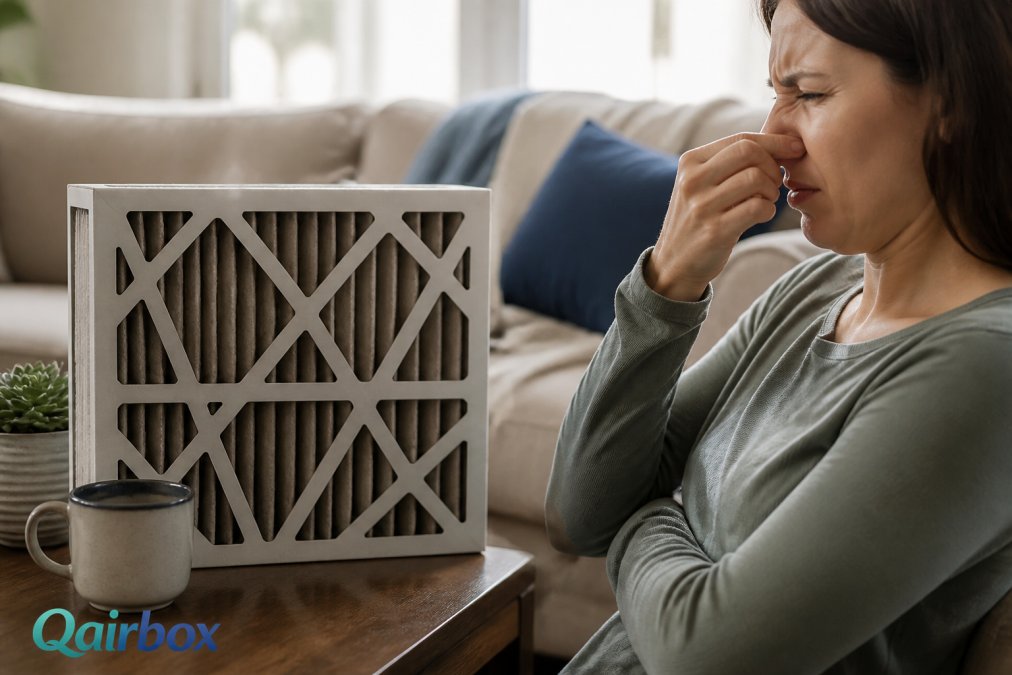
Table of Contents
- Can Standard HVAC Filters Actually Stop Odors?
- How Activated Carbon and HEPA Filters Work Against Odors
- Why High-Density Filters Create Problems in Your HVAC System
- How to Remove Household Odors: Beyond Filter Upgrades
- Whole-Home Air Purification Systems: A Better Approach
- When Filter Saturation Stops Odor Control
- What Homeowners Should Know Before Upgrading Filters
Last Updated: August 16, 2026
Can Standard HVAC Filters Actually Stop Odors?
The short answer: standard HVAC filters are not designed to eliminate odors, and upgrading to high-density filters often creates more problems than it solves. Most homeowners assume that a thicker filter or one labeled "odor control" will handle cooking smells, pet odors, or musty air. The reality is far more complicated, and understanding why matters for your home's air quality and system longevity.
When you ask whether HVAC air filters stop odors, you're really asking whether the filter media can capture odor molecules. Standard furnace filters are engineered to trap particulate matter: dust, pollen, pet dander, and mold spores. These are solid particles with physical size. Odors are different. They're volatile organic compounds, VOCs, that exist as gases. A MERV 8 or MERV 11 filter catches particles but allows odor molecules to pass straight through. The filter isn't the right tool for the job.
The confusion runs deeper than most homeowners realize. Many people conflate "odor control" marketing language with actual odor removal. A filter labeled "charcoal" or "carbon" might sound like it handles smells, but whether it actually works depends on the amount of activated carbon, the airflow velocity through it, and how long the carbon bed remains effective. Most HVAC filters have minimal activated carbon, and once that carbon becomes saturated, which happens faster than most people expect, it stops working entirely.
How Activated Carbon and HEPA Filters Work Against Odors
Activated carbon removes odors through a process called adsorption, which is fundamentally different from the particulate filtration that standard HVAC filters perform. When odor molecules contact activated carbon, they stick to the carbon's surface due to weak chemical forces. This works well in theory, but HVAC system constraints create real-world problems.
HEPA filtration is excellent at capturing fine particulate matter, it removes 99.97% of particles 0.3 microns or larger. But HEPA does nothing for odor molecules. A HEPA filter might trap the dust that carries a smell, but the odor gas itself flows right through. This is why hospitals use HEPA for particulate control and activated carbon in separate stages for chemical and odor removal. Residential HVAC systems rarely have that two-stage approach.
Activated carbon works best under specific conditions: low airflow velocity, long contact time, and sufficient carbon mass. In a standard furnace filter, you're constrained by the physical size of the filter and the speed at which air moves through it. Residential HVAC systems push air quickly, sometimes at speeds that give odor molecules only milliseconds of contact with the carbon. At that velocity, adsorption is incomplete. The odor passes through partially treated.
Carbon bed saturation is the critical limitation nobody discusses. Activated carbon has a finite capacity. Once it's saturated with odor molecules, it cannot absorb more. A filter with 0.5 ounces of activated carbon, typical for residential furnace filters, saturates in weeks in homes with pets or frequent cooking. After saturation, the filter becomes a pass-through. You're paying for odor control you no longer have.
Why High-Density Filters Create Problems in Your HVAC System
This is where the real danger starts. Many homeowners, frustrated with odors, upgrade to higher MERV-rated filters or thicker filters with more activated carbon. The logic seems sound: denser filter, better capture. The outcome is often system damage.
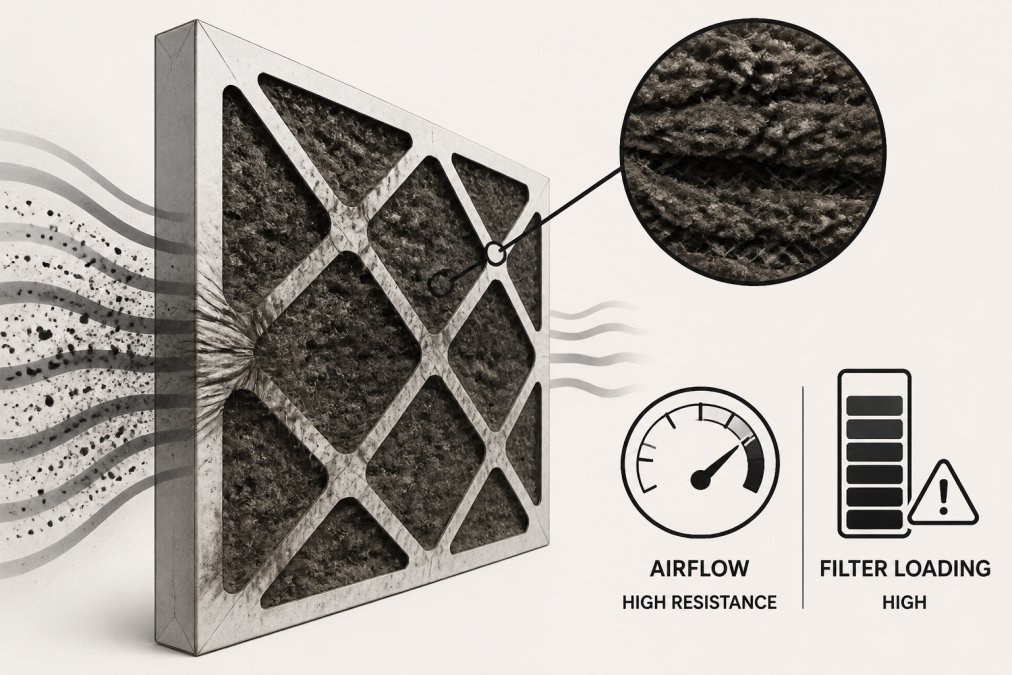
High-density filters create static pressure. As the filter becomes more restrictive, your blower motor has to work harder to push air through it. This increases pressure drop across the filter. Over time, that extra strain damages the blower motor, reduces airflow efficiency, and can shorten the lifespan of your entire HVAC system. The motor was engineered for a specific pressure range. Push it beyond that, and you're accelerating wear.
Airflow restriction also triggers a secondary problem: bypass air. When pressure builds up, air finds the path of least resistance. Instead of flowing through the filter, some air leaks around the edges or through small gaps in the filter housing. This unfiltered air bypasses your expensive high-density filter entirely, defeating the purpose. Your system is working harder while delivering worse filtration.
Static pressure damage is cumulative and often invisible. You won't see the blower motor failing until it fails completely. By then, you're looking at a costly replacement. HVAC technicians see this pattern repeatedly: homeowners install premium filters thinking they're improving their system, then call in a panic when the motor burns out or efficiency drops 30%.
The other issue is filter lifespan. A high-density filter clogs faster than a standard filter. If you don't change it frequently, sometimes every 30 days instead of every 90, you're running at maximum pressure drop constantly. That's not a maintenance inconvenience; it's system stress.
How to Remove Household Odors: Beyond Filter Upgrades
If HVAC filters can't reliably stop odors, what actually works? The answer depends on the type of odor and the source.
Cooking odors and pet smells are organic compounds. They respond well to activated carbon, but the carbon needs sufficient mass and contact time. A standalone carbon filter sitting in the room where the smell originates works far better than a filter buried in your furnace. The air moves slower, the contact time is longer, and you can replace the carbon when it saturates.
Mold and mildew odors signal a moisture problem, not a filtration problem. No filter fixes mold. You need to address the source: reduce humidity, improve ventilation, or eliminate the conditions where mold grows. A dehumidifier and proper air circulation are the real solutions.
Smoke odors are among the most stubborn because they're a mixture of particulates and volatile compounds. Particulate filters catch some of the smoke particles, but the gaseous components pass through. Effective smoke removal requires both particulate filtration and chemical adsorption, activated carbon, specifically, working in tandem.
For households with persistent odors, the most reliable approach is source control combined with whole-home air purification. Remove or reduce the odor source where possible. Then deploy a system designed to handle the air quality problem comprehensively, not a filter designed primarily for particulate matter.
Whole-Home Air Purification Systems: A Better Approach
A standalone whole-home air purification system addresses the core limitations of HVAC filters. Instead of relying on your furnace filter to do a job it wasn't designed for, a dedicated system handles odor removal, particulate filtration, and chemical off-gassing with optimized airflow and contact time.
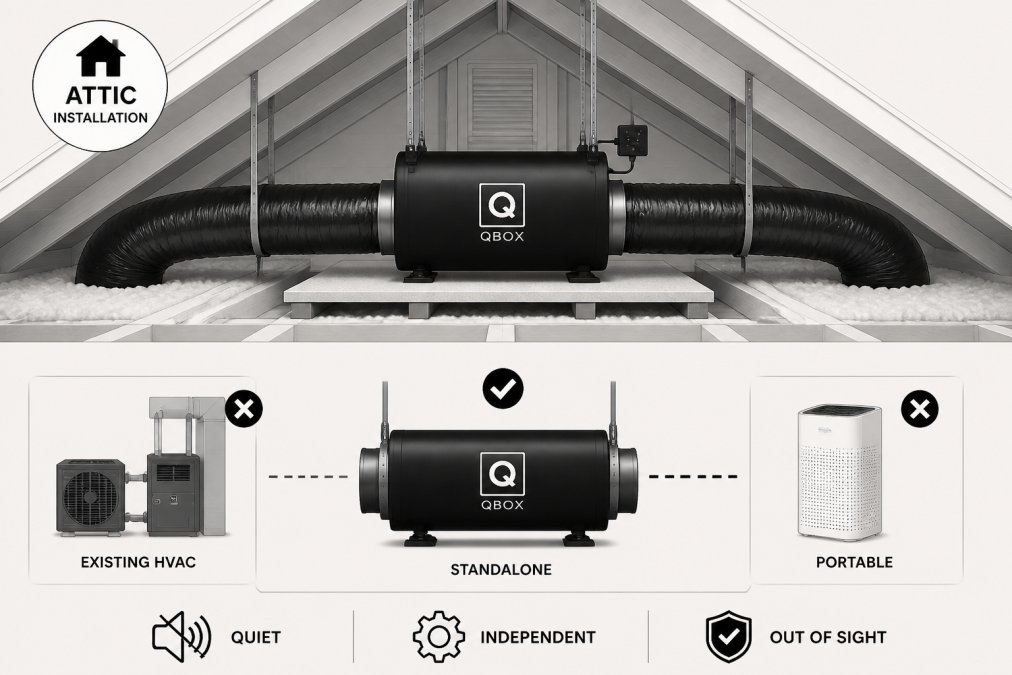
Qairbox operates as a standalone system, professionally installed in the attic and running independently 24/7. It doesn't modify or integrate with your existing HVAC system, it works alongside it. This separation is critical. Your furnace filter still handles particulate matter for your HVAC system's protection. Qairbox handles odor removal and chemical filtration for your home's air quality. Neither system interferes with the other.
The design advantages are significant. A dedicated purification system can use hospital-grade filtration without creating the pressure-drop problems that plague HVAC filter upgrades. The airflow velocity is optimized for adsorption. The activated carbon bed is substantial enough to handle real household odors for weeks, not days. When it saturates, you replace it, a straightforward maintenance task, not a system strain.
For homes in hot, tightly sealed desert climates, the benefits compound. These homes are engineered to minimize air leakage and maintain cool temperatures. That tight envelope traps odors and volatile organic compounds. A whole-home purification system designed for these conditions removes those trapped contaminants without forcing your HVAC system to work harder.
Allergy-sensitive households benefit most. A whole-home system reduces not just odors but airborne particles, pet dander, and dust throughout the entire home. Unlike room purifiers scattered in bedrooms and living areas, a centralized system handles air quality consistently across all spaces.
When Filter Saturation Stops Odor Control
Understanding filter saturation explains why activated carbon filters fail so predictably. The saturation point is where the carbon bed reaches capacity and can no longer absorb odor molecules. After saturation, the filter becomes inert, it's no longer removing odors.
Several factors accelerate saturation. Homes with pets experience faster saturation because pet odor molecules are continuous. Kitchens with frequent cooking load the carbon quickly. High humidity can also affect carbon performance, as moisture competes with odor molecules for adsorption sites on the carbon surface.
Most homeowners don't realize saturation has occurred. The filter still looks relatively clean, it's not clogged with dust. But the carbon is spent. You replace the filter on schedule, but if the schedule is based on particulate clogging, not carbon saturation, you're running with exhausted carbon for weeks.
This is why activated carbon filters in HVAC systems are a poor long-term solution. You'd need to replace them every 30 days to ensure the carbon is always effective. That's expensive and inconvenient. Most people replace them every 90 days, which means two-thirds of that time period involves a saturated, non-functional carbon bed.
A dedicated purification system solves this by making filter replacement part of the design. You're not guessing at saturation; you're maintaining a system built specifically for this purpose. Replacement is straightforward, and the system is engineered so that filter maintenance doesn't compromise your home's HVAC performance.
What Homeowners Should Know Before Upgrading Filters
Before you buy a premium HVAC filter hoping to solve odor problems, understand what you're actually purchasing and what risks you're taking.
First, check your HVAC system's specifications. Your furnace or air handler has a maximum MERV rating it can handle safely. Exceeding that rating creates pressure-drop problems. Most standard residential systems are rated for MERV 8 to MERV 11. Jumping to MERV 13 or higher without knowing your system's limits is a common mistake.
Second, understand the difference between particulate filtration and odor removal. If you're buying a filter primarily for odor control, you're using the wrong tool. A filter designed to protect your HVAC system from dust isn't optimized for chemical adsorption.
Third, be realistic about filter replacement frequency. If you install a high-density filter, you must commit to replacing it more often, every 30 to 60 days instead of 90. If you're not willing to do that, the filter will create system strain without delivering the benefits you expect.
Fourth, monitor your system's performance. If you notice reduced airflow, longer heating or cooling cycles, or higher energy bills after installing a new filter, the filter is likely creating excessive pressure drop. Switch back to a lower MERV rating immediately.
For homes with serious odor problems, the honest assessment is this: HVAC filters are not the solution. They're not designed for it, and upgrading them creates risks that outweigh any benefit. A whole-home air purification system designed specifically for odor removal, installed professionally and running independently from your HVAC system, delivers results without compromising your heating and cooling system's longevity or efficiency.
The difference between managing a symptom and solving a problem is understanding what tool fits the job. Standard HVAC filters manage particulate matter. They don't stop odors. High-density filters create system strain without reliably eliminating odors. If you're dealing with persistent household odors, whether from pets, cooking, or environmental factors, a whole-home air purification system like Qairbox addresses the problem directly. Professionally installed, running 24/7 out of sight in your attic, and designed for homes in dusty, hot climates, it removes odors, airborne particles, and chemical irritants throughout your entire home without touching your existing HVAC system. Schedule a consultation to see how whole-home purification works for your home's air quality.
Frequently Asked Questions
Do HVAC air filters actually eliminate odors?
Standard HVAC filters stop particles but not odor molecules. Activated carbon filters can adsorb odors, but they saturate quickly and create airflow restriction problems in your HVAC system. Most homeowners find that filter upgrades alone don't solve persistent odor issues like pet smells, cooking odors, or smoke. A whole-home air purification system designed specifically for odor removal works more effectively without damaging your HVAC equipment.
What's the difference between HEPA and carbon filters for odor control?
HEPA filters trap particles like dust, pet dander, and pollen, they don't remove odor molecules. Activated carbon filters adsorb volatile organic compounds (VOCs) and odor molecules through chemical bonding, making them better for smell removal. However, carbon filters in standard HVAC systems create static pressure problems that strain your blower motor. A dedicated whole-home air purification system handles both particle and odor removal without stressing your existing HVAC.
Why do odors persist even after replacing my furnace filter?
Odor molecules are smaller and different from particles. Standard HVAC filters and even upgraded ones don't capture all odor molecules, they pass through as bypass air. Additionally, filters saturate over time, losing their ability to adsorb new odors. If your home has persistent cooking smells, pet odors, or chemical off-gassing, a whole-home air purification system that runs independently of your HVAC will remove odors more effectively while protecting your system from pressure drop damage.
Could upgrading my HVAC filter damage my air conditioning system?
Yes. High-density activated carbon filters increase static pressure, forcing your blower motor to work harder and reducing overall HVAC efficiency. This pressure drop can shorten your system's lifespan and increase energy costs. A standalone whole-home air purification system avoids this problem entirely, it operates independently without modifying your existing HVAC, so your AC runs normally while your air gets purified throughout the entire home.